
You can't always get what you want, part two
Was she practiced at the art of deception?

Hi, all.
This is the second installment in a saga about found community, which I know all of us on the left have been trained to idolize. But sometimes you should leave things you find in the gravel right there for someone else to pick up. Mostly the experience has been a microcosm of important life lessons, and I guess I needed a little reeducation. Please check in with part one if you haven’t already - this is not a standalone post.
Speaking of murderous inspiration ;) read on for a little more fun book news, and please click the heart and share!

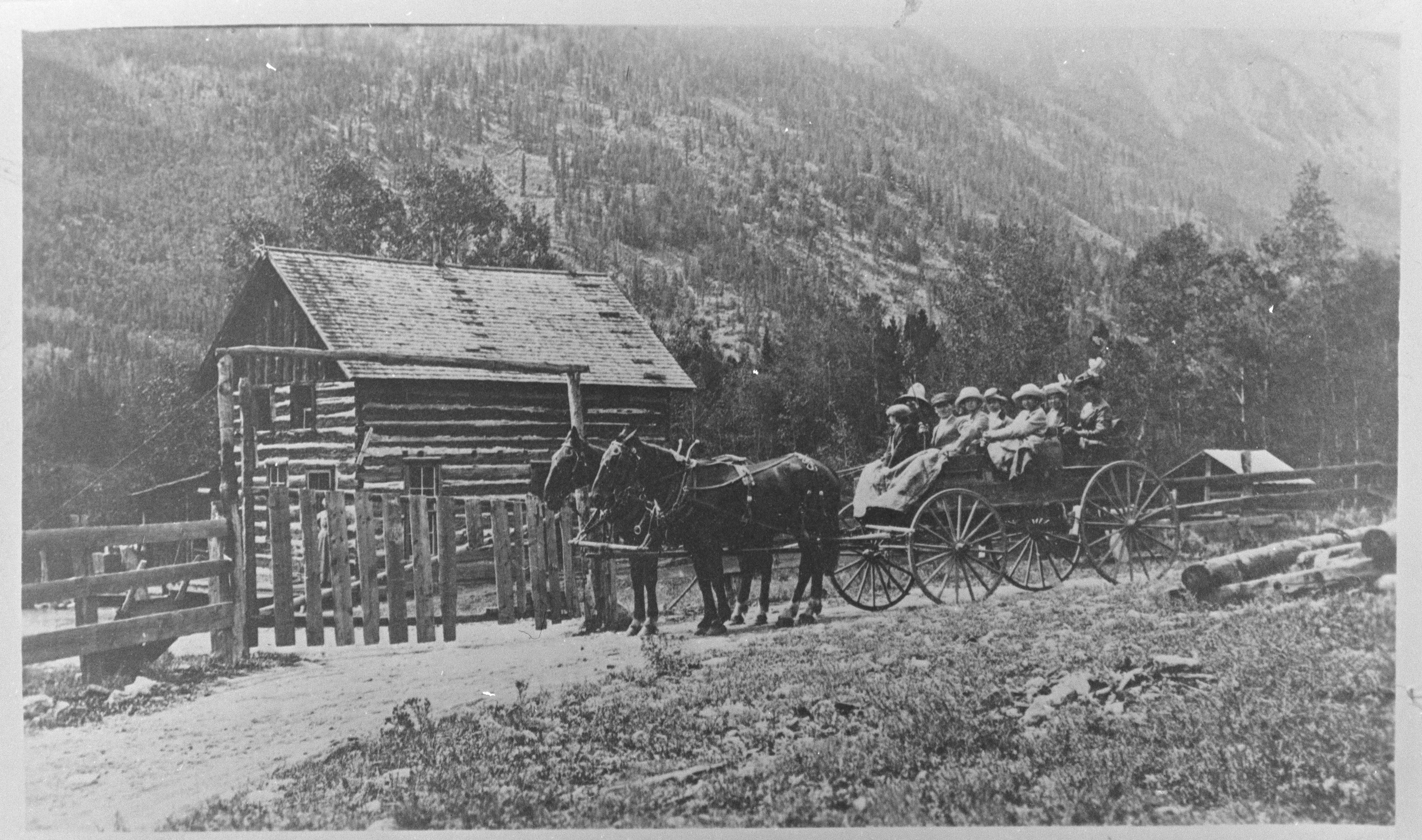
A few years ago, our little mountain historical society applied for a grant to digitize its large cache of photographs from the late 19th and early 20th century. The photos document everyday life and work in the canyon, from hauling ore to community dances. A miner in a neat suit holds the hand of a small girl in a lace-trimmed dress and pigtails. Two women ride horses Western style, looking as free and ready for action as any man. Community dances and reunions contrast with images of the grinding, dirty labor, the rough mine buildings, the giant gears and life-threatening machinery. And, of course, there are many burros <3.
The grant would cover half the cost of scanning and tagging the photos, the society would pay for the rest. The only requirement was that we agreed to make the images available to the public for research and education.
No problem, I thought, as I finished the application and hit send. I was excited; it felt like my first substantive contribution to the society’s work. This was, I should add, well before the “smelter” standoff.
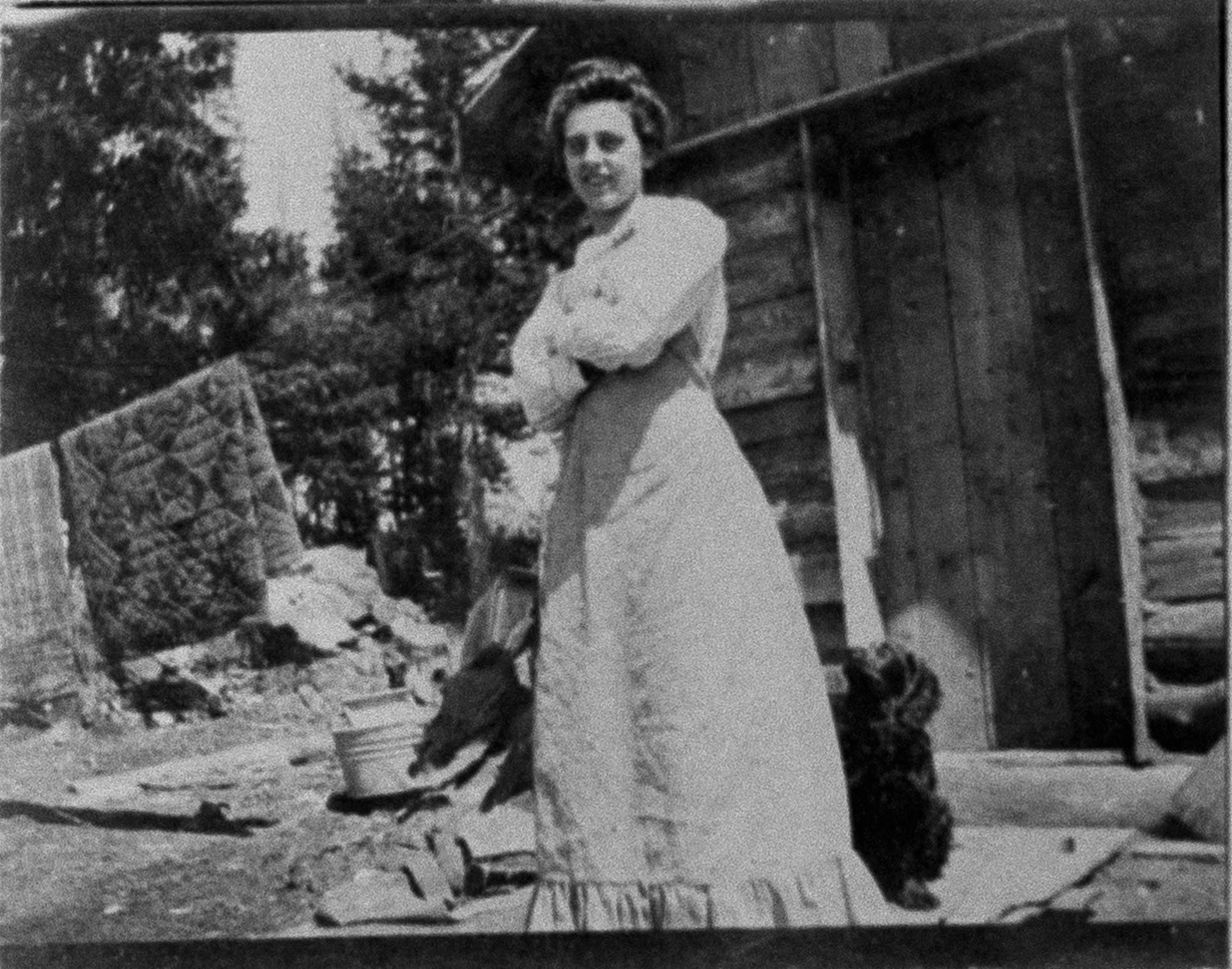
Emily, our official historian, helped write the narrative for the grant. We were awarded the funds a few months later and the society hired Emily’s daughter to do the work. We got tantalizing updates at our meetings as the project progressed: grainy images of women atop a mountain, the postmistress in front of her cabin.
A year passed, and our follow-up report was due to the foundation. How would we make the photos available to the public, I asked. Emily said she had considered placing them in a university collection, but she rejected that option because the institutions would own the images.
This … let’s call it a misunderstanding … was so easy to disprove, I should have realized something was up. In the meantime, we hadn’t actually seen the digitized images. A slideshow was arranged in the meadow between the cabins during our celebration of the town’s 14oth anniversary.
Emily narrated a few dozen photographs by firelight while we huddled under blankets in foldout chairs.
“Haven’t we already seen these?” someone whispered when the image of the postmistress appeared. “Where are the rest of them?”
Emily floated the idea of just keeping the photos on a Google drive for the society’s use, but this wouldn’t have met the terms of the grant any more than a partial slideshow twelve miles up The Worst Road in North America.
I researched inexpensive software that would allow us to host the images ourselves and collect fees for licensing them. The more bookish of the Lowe brothers, inspired perhaps by Emily’s palpable opposition, offered to investigate this option himself. Shortly after, he fired off an email announcing that a museum in Leadville was using the software … and the software didn’t have the capability to make the images available to the public.
I almost threw my computer through the wall when I read this. The museum was licensing a lower tier of the software with less functionality, which would have taken all of five minutes to figure out. But Tall White Guy Authority had struck again.
We were so close, though. I updated the proposal for the next meeting. The overall reception seemed positive; the questions and comments were all heading in the right direction.
Until Emily announced the society didn’t own the images. They belonged to the people who’d donated them, she said. Many of those people, you’ll recall, happen to be her ancestors.
This was such an unexpected claim, I was disarmed for a minute. Many – most? – of the images had been held by the society for decades. They had appeared in society publications and local newspapers long before Emily was designated our historian. Emily herself had posted several on our Facebook page, with a link back to her genealogy business (!!).
More than that, if the photos didn’t belong to us, why did we pay to have them digitized with the help of a public grant? And with the explicit promise that we would make them available to the public? But we tabled the issue once again. There were rotten logs to be replaced and trees to be felled.
I contacted a society member who’d been around for its earlier days. “Most of the photos came from people and family collections and were given to CCCHS,” he replied. “I believe they were given to the Society to further promote the historical area.”
I shared this evidence with the society in as diplomatic, non-I-told-you-so fashion as I could manage. I was an overheated tea kettle at this point, steaming quietly in public, spouting off at home. All these priceless photos trapped forever on one woman’s hard drive. Etcetera. Michael endured many a rant on the calamity.
If we could have come up with a proposal involving chainsaws, it would have been done years ago, but this deathless issue, which lit me up like Roman candle, was the agenda equivalent of listening to a white-noise app while blindfolded. It’s possible some part of my brain was just furious I’d become that person at meetings. I mean, why not bird-watching?
Finally, several months later, Emily gave us access to a Google drive containing hundreds of scans. And you know what? All’s well that ends well! That’s what I said to Michael as I arranged for Emily to meet with the historian at our local heritage museum.
The heritage museum has a large online digital archive and they were very interested in hosting the photographs. Our collection would be labeled within the database. The cost to the society would be minimal and we could earn money licensing the images.
Unfortunately, on the day of the meeting, one of our members was sick. I rescheduled by email. Emily and her husband went anyway …
… And came back with a proposal to write a grant for the Moonshine Jones cabin. They didn’t even discuss the photos.
What was especially remarkable about this turn of events was that the society had just decided officially not to pursue funding for the Moonshine Jones cabin.
“Just quit,” Michael said. “This is a waste of your time.”
Something was up, absolutely, and I should have caught on at this point. But we’d come so far. And I’d signed my name to that damn application, which said we’d make the photos available to the public.
You might be wondering at this point, how much was that grant?
Six hundred dollars.
It’s the principle, okay?
I arranged another meeting with the heritage museum, and this one I did not miss. Emily didn’t attend, but I wasn’t concerned. She lived almost two hours away. At the next gathering of the society, I had the proposal all in order.
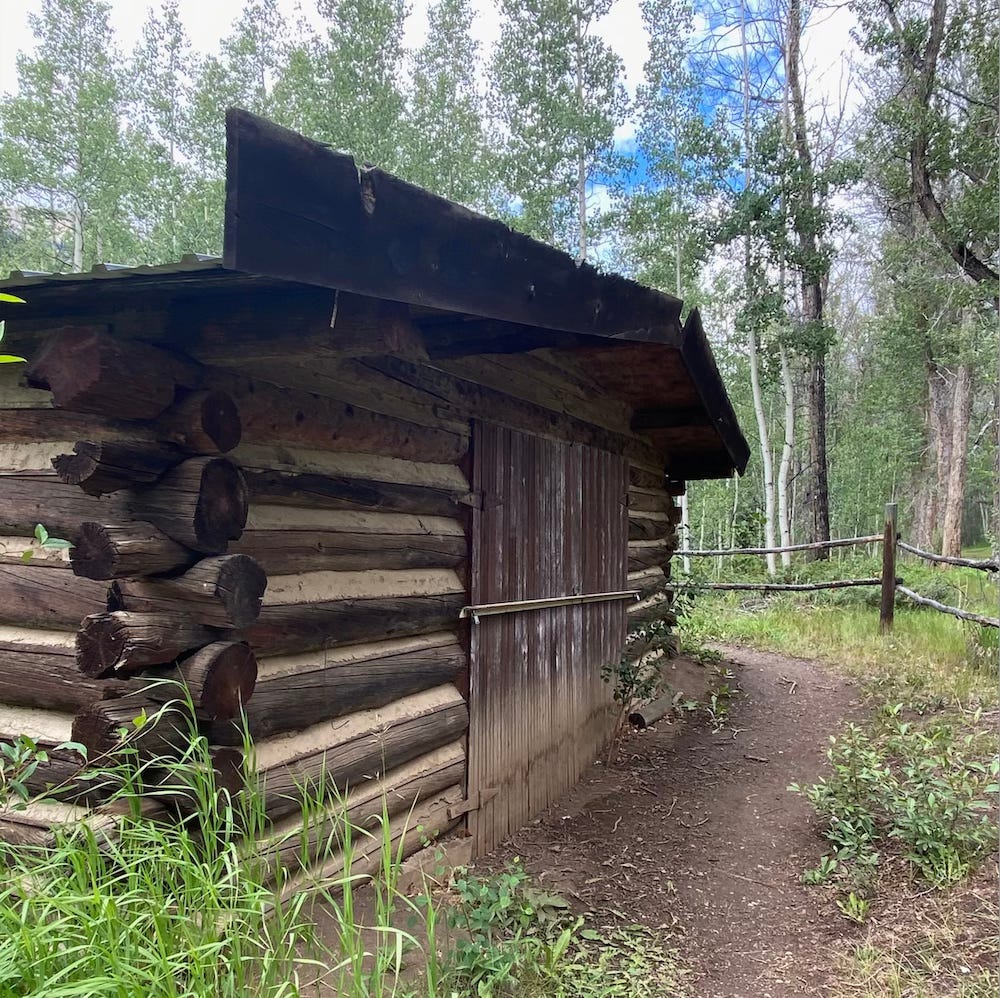
It was our big annual in-person meeting in the old mining town, which is always followed by a potluck. Appetizers, hot dishes, and desserts were crowded onto a table in the kitchen. A sizable crowd lined the chairs, benches, and the ledge in front of the fireplace. Peace and understanding were in the air. I even said Michael and I would install the Smelter sign, several yards away from our cabin. (Yes, I know, I’m a pushover sometimes.)
The presentation went well, a few questions were asked. Heads were nodding. People were smiling. Someone made a motion in favor of placing the images with the heritage museum.
Then Emily raised her hand. She was close to tears. She didn’t know about the meeting, she said. She hadn’t received the emails.
The room exploded. A charismatic woman named Kerry* immediately took her part. It was outrageous to exclude Emily after everything she’d done, Kerry said. She couldn’t vote for the resolution. The room swung in an instant.
I’d like to say I calmly picked up that hand grenade, stuck the pin back in, and returned it to Emily’s fine-boned hands. And maybe I would have. But the society’s secretary spoke up: She didn’t want this project to take ten years and that’s what was going to happen if we kicked it down the road again.
Kerry was apoplectic. It wasn’t going to take ten years, she said. That was a ridiculous and unfair thing to say.
Well, our secretary pointed out, it’s already taken five.
She was right. We’d received the grant in 2020, during the pandemic. Five years of working around objections, of addressing manufactured problems, of wondering whether I was dealing with incompetence or clever foot-dragging.
Reader, I lost my shit. Not Rahm Emanuel On Days That End With Y Lose-my-shit; maybe close to Amy Klobuchar With a Stapler. But as I often remind my youngest Terrier, barking at people does not calm them down. It was over. The issue was tabled. Again.
Emily came up to me afterward, victorious, still upset. She was definitely crying now. I wasn’t conciliatory. I accused her of acting in bad faith, of wanting to keep the images for herself. And that’s when she told me: She had been diagnosed with dementia.
I sent one final email to Emily and the society’s officers that compiled the history of the project and the meetings, the avenues we’d explored and rejected to meet our funding obligations. And then I let it go.
This was my found community, but it was Emily’s found family. Was it better to let her enjoy the cabin and the place that means so much to her while she still can? Was it really more important to share these images for a theoretical public than to let her safeguard her personal connection? I could’ve argued it both ways for you, but I was finally done.
I didn’t attend the next meeting, where the society voted to place the images with the heritage museum. Emily is working with the team preparing the files for the upload.
But reader, that Smelter sign is never going to be in our yard.
UPDATE: While we were visiting the cabin with our neighbors last month, I learned that the images will be added to the heritage museum’s database this year. Fingers crossed, y’all. I will post a link when it happens, because so many of these photos are really special. Remember, it doesn’t matter who gets the credit, as long as it gets done. That’s what I’m telling myself, anyway ;) But, really, this would have died on the vine if not for the society’s secretary. It can really help to have someone versed in corporate diplomacy on your team.
Oh, also? It turns out the society is (or is again? unclear!) responsible for the Moonshine Jones cabin. And a good thing, too. We were running out of buildings that need new roofs.
*A reminder that names have been changed and the timeline has been condensed in places. Also, this is just my version of events ;)
BOOK NEWS PART TWO
There is nothing like an announcement in Publishers Marketplace to make a writer feel like she’s arrived!
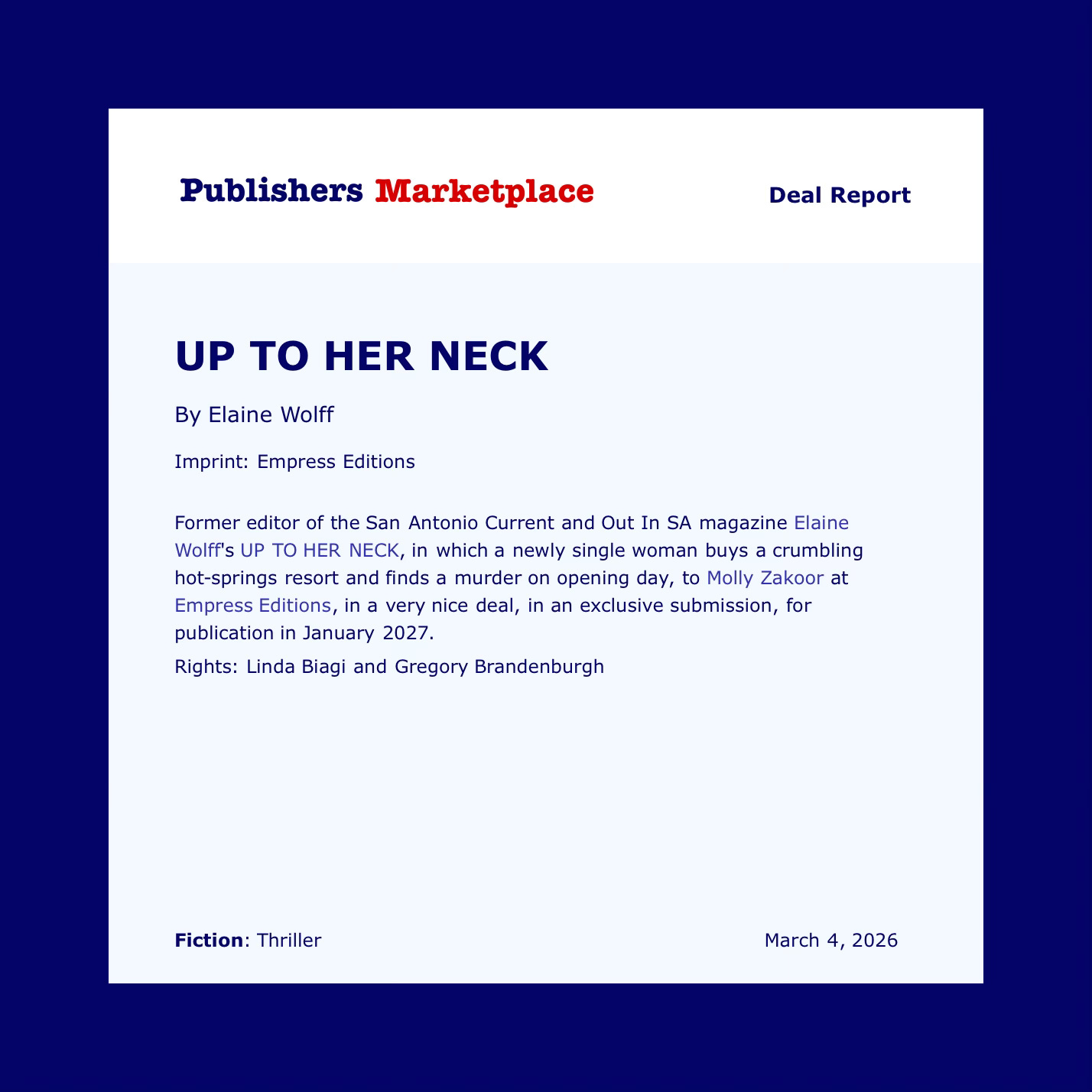
In addition to the pithy description above, my genius publisher THE EMPRESS describes Up to Her Neck like this:
Perfect for fans of Lisa Jewell and Deanna Raybourn!
She wanted a fresh start. She got a body instead.
Empty-nested and newly single at forty-seven, Wendy McFarquhar drains her savings to buy a ramshackle hot-springs resort in an old mining town. The plan: renovate, reopen by ski season, and reinvent her life along the way. The reality: before she can welcome a single guest, the town’s resident troublemaker turns up dead on her property.
Wendy suspects the mining corporation trespassing nearby-but their rugged engineer seems determined to distract her. The sheriff detains her best friend. And suddenly, Wendy is knee-deep in secrets, suspects, and very bad timing.
Her ex-husband refuses to sign the divorce papers, putting her bank loan — and the resort — at risk. Her oldest daughter is dating one of the suspects. Her youngest is coming out, moving home, and bunking in Wendy’s sixteen-foot Airstream. Now a moderately fit suburban realtor with a fear of heights must uncover the truth, save the hot springs, and figure out how to parent grown children without making things worse.
It’s available for preorder at bookshop.org and barnesandnoble.com, so please make my year and plan ahead for early 2027! Preorders can make or break books these days, especially debuts. If you do preorder, DM me a copy of your receipt, because I’ll be planning some fun preorder incentives, and you will be grandmothered in! XX
Can’t wait to see those photos! 👀
🤞🏼