
Three parrots and a burro walk into a spa ...
You've gotta be resourceful in the mountains

If you enjoy this post, please click the heart and share Gallivanting with a friend.
It’s been a minute, friends. The holidays and work caught up to me, and I have not even cracked the box of elevated blood pressure that is Tax Time for the Self-employed. We drove to LA to celebrate Michael’s 60th birthday with family, and on the way back we stopped in Palm Springs to see a dear friend. Palm Springs is known for its vintage shops, and I did buy a parliament of 70s macrame owls for the Scottsdale bedroom, and an 80s Roberto Cavalli sweater with a large leather tiger and fringe for running to the grocery store, or protesting federal overreach and brutality.
This week and next, I’m sharing some of the local legends that inspired my contemporary midlife thriller, Up to Her Neck (coming so soon - August! And on pre-sale much sooner than that!), then we’ll get back to cabin life. Despite many more rewrites than warranted, this post still came out sounding a little like a news-magazine column, like my old professional-distance reporter self — old habits die harder than a Toyota Tercel. It contains some great photos, though. If it gives your email fits, try opening in the browser or Substack app. As always, thank you for reading!
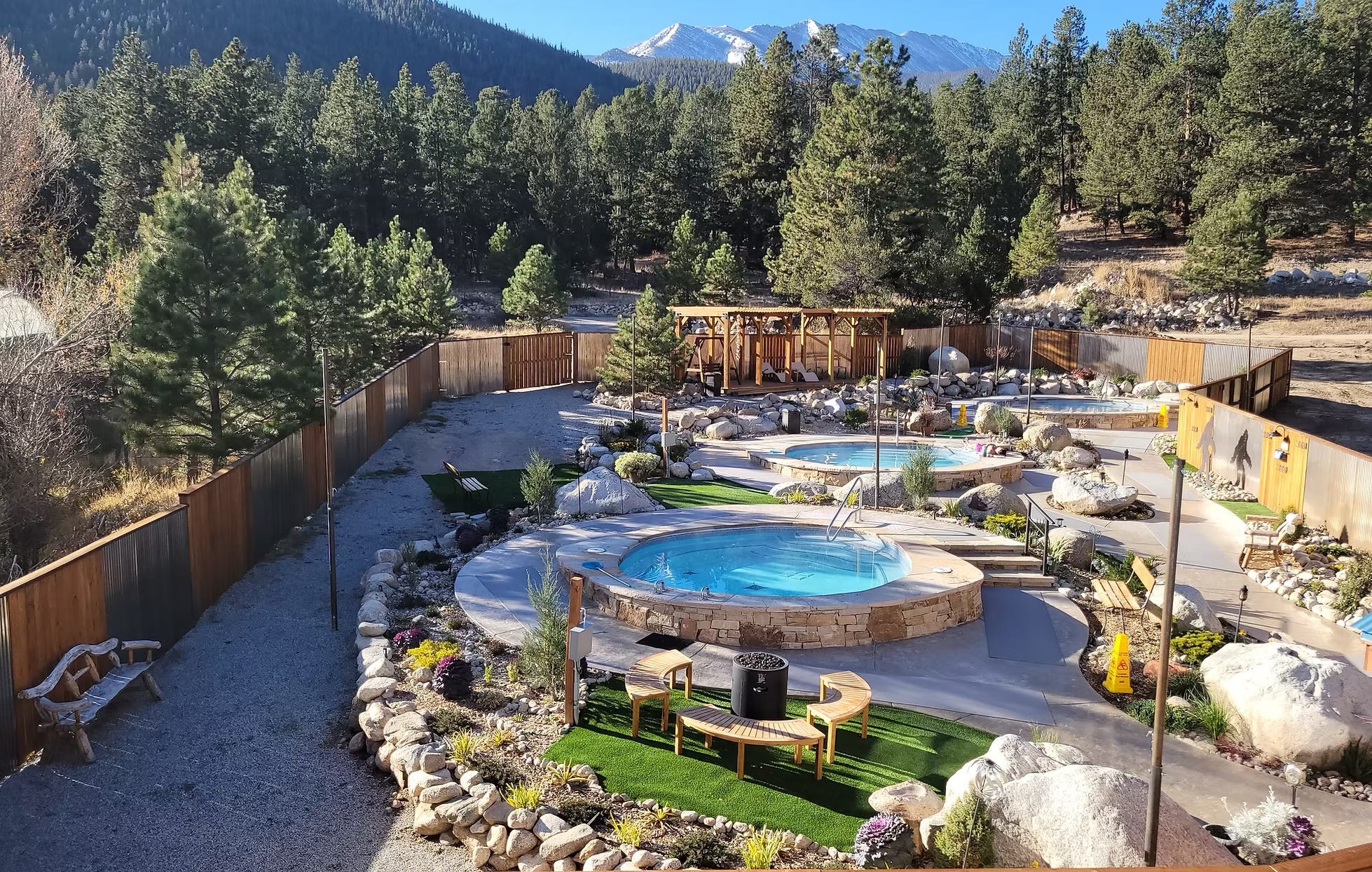
Charlotte Hot Springs in Buena Vista, Colorado, has been one of my favorite soaks since it opened a few years ago. It’s just three round pools in a simple setting, no massage rooms or cold plunges, unless the snow is deep. The changing rooms are clean, the front desk is professional, and the place is quirky enough that you know it’s run by real locals.
Next to the snack fridge, before you get to the Shein swimming suits and the cut-your-own herb garden, a pair of Macaws rustle their plumage and eye the patrons from a large open cage. Mary Ann has deep blue and bright yellow feathers with a green cap. Ginger, of course, is a voluptuous redhead. I’ve never heard them speak, but a sign next to the register claims they say, “Crap rabbit,” “That’s screwed up,” and most appropriately, “Chillin’.” Crap rabbit!
The pools are outdoors, next to the greenhouses where the Merrifield family raises plants for their garden hut in town. Just up the road, the Merrifields rent out two beautifully redone homestead cabins with private soaking. All of it is fed by the extensive hydrothermal system that runs under the Upper Arkansas River Valley — a system so large and complex, even the wonks at the Colorado School of Mines don’t fully understand it.
According to local legend, one of the Merrifield forebears was digging for silver when he ran into a vein of hot water. As folks say in the mountains, you’ve gotta be resourceful, so he pivoted and started offering twenty-five-cent baths to his fellow miners.
It’s a good story. I’ve repeated it myself many times.
Charlotte’s name can also be found on Memories of St. Elmo, a small book for sale at the hot springs filled with vignettes from her childhood in a mining boomtown southwest of Buena Vista. It was a life of hard work and deprivation. No electricity or cars. Dinner might be tripe in sour-cream gravy or creamed salt cod with potatoes. Or much less. Mining was a risky proposition, and even when payday was good, her father had trouble resisting the saloon and the company of his fellow gamblers.
“Mother used to say one month we live on chicken,” Charlotte wrote, “and next month on feathers.”
Young Charlotte’s chores included gathering firewood and coal, scrubbing the outhouse floors with lye, and washing clothes. “Seems we were always carrying water,” she said.
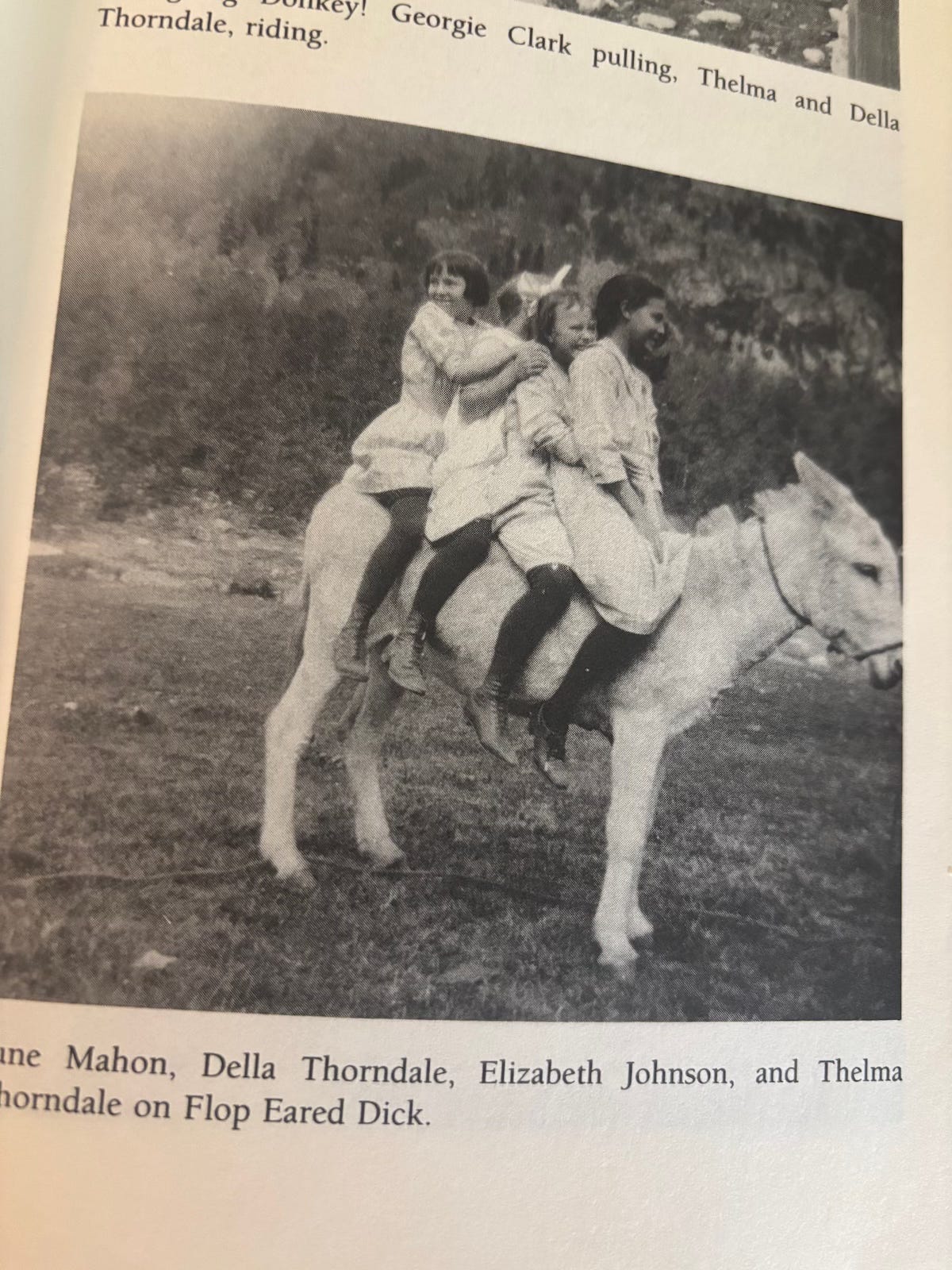
But her free time sounds like heaven. “In the summer you could find us leading and riding our stubborn little burros.” Charlotte’s was named Flop Eared Dick. “We had wonderful sports all winter, skiing, tobogganing, ice skating, sleighing, and sledding. In summer we fished, hiked, picked wild strawberries, raspberries, huckleberries and dreamed.”
And dreamed!
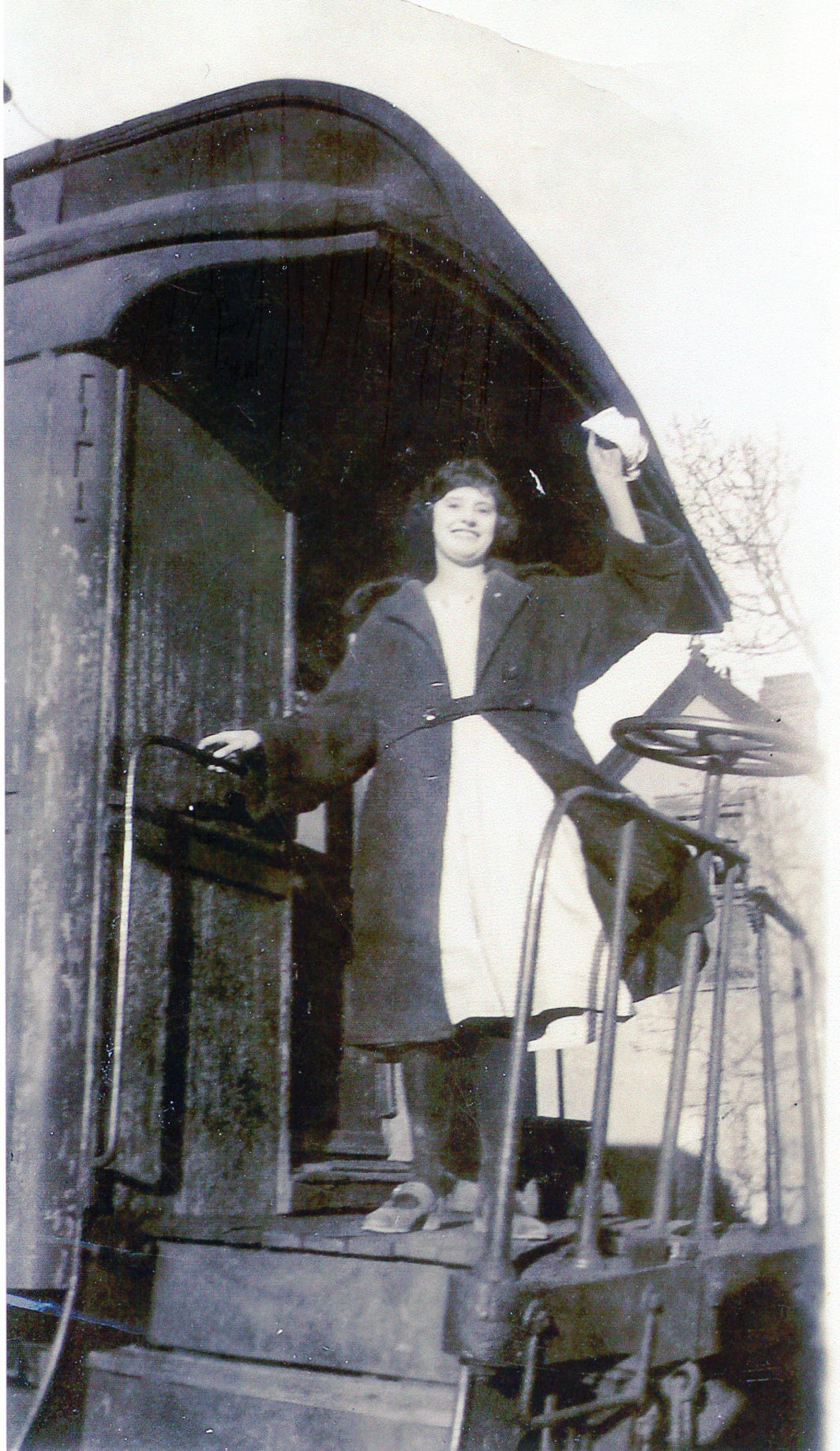
Charlotte met Roy Merrifield, the son of another miner, when she went to work in his restaurant in town. The couple opened and sold several businesses in Buena Vista over the years, including the Green Parrot Cafe on Main Street, named after a pet Macaw. At other times, Charlotte ran a salon, managed a hotel, and worked in retail.
“Grandma, she was a tough cookie,” Glen Merrifield told me. And this resourceful woman played a key role in the hot spring’s story.
“Mother used to say one month we live on chicken, and next month on feathers.”
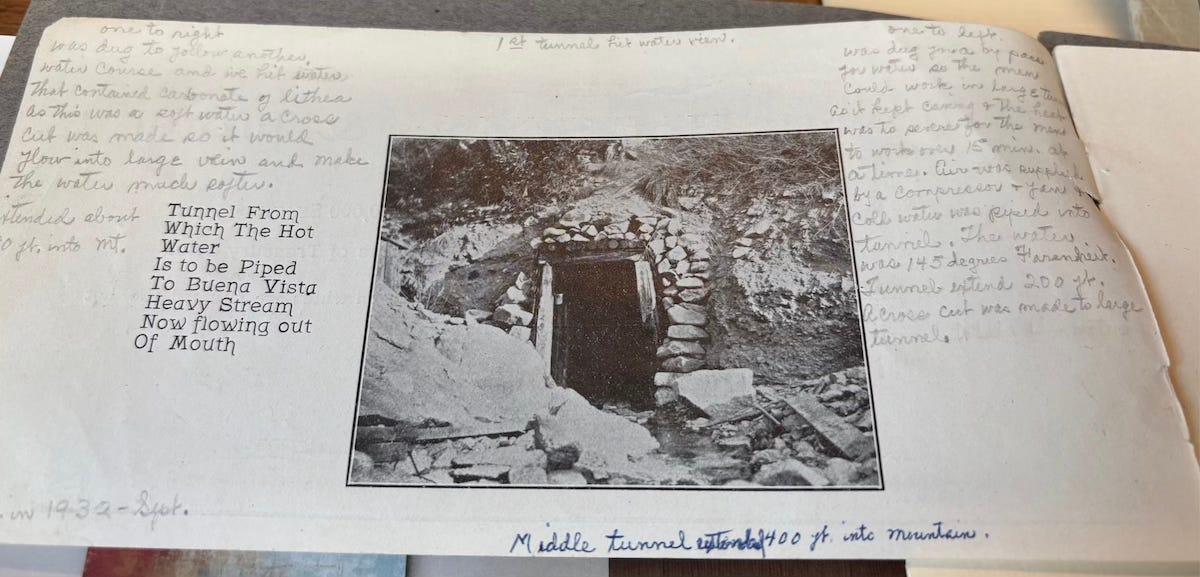
Roy Merrifield wasn’t looking for silver when he hit the aquifer; he was mining for the source of the hot water that seeped into Cottonwood Creek with Judson Holloway, whose father had patented a large claim west of town decades earlier. They dug three tunnels before they were done, the main one 400 feet long. Charlotte left notes (in immaculate cursive) describing the harsh and dangerous conditions:
“One [tunnel] to left was dug for a by pass for water so the men could work in large tunnel, as it kept caving and the heat was to[o] severe for the men to work over 15 min. at a time.”
The region’s last silver boom had petered out in the late teens, followed by the Great Depression a decade later. The Cottonwood Hot Springs hotel, just to the east, never reopened after a fire in 1911. The original Mount Princeton resort, ten miles south, was in foreclosure. But both had drawn celebrities and politicians in their early years, along with pages of irrationally exuberant newspaper coverage.
Holloway started a venture to pipe the hot water into Buena Vista and “erect commodious bath houses and swimming pools.” The business pitch promised an annual income of $40,000, almost $1 million in today’s dollars. “[T]here is no doubt but what there will be 100,000 people annually enjoy the benefits and pleasures of the hot baths.” To give you some context, the current population for the entire county is just over 21,000.
Thirty miles south, the Depression-era WPA built pipes and pools to bring thermal water from Poncha Springs to nearby Salida — which still operates the public aquatic center — but the Buena Vista project never came to fruition. Glen thinks World War II might have cut the development short.
Several years later, Holloway deeded the property to Roy. Charlotte took the paperwork by horse and buggy to the county clerk in Salida for recording.
“Grandpa wasn’t going to do it,” Glen said. He didn’t want to piss off the Holloways.
Buena Vista historian Suzy Kelly, who co-authored Memories of St. Elmo, thinks it’s more likely Charlotte drove a Model A. Either way, it’s a good story — it’s not like she fired up the heated seats in the Lexus.
“It kept caving and the heat was too severe for the men to work over 15 min. at a time.”
“She was so accomplished,” Suzy said. “She was a hairdresser and she could work at a bar.” Charlotte’s mother had set the example, tearing up the saloon in St. Elmo when she’d had it with her husband’s carousing, working as a cook at the original Mount Princeton, and hauling a large stove to Buena Vista to start a bakery that produced hundreds of loaves each day.
Decades passed, deeds and decrees were filed, and the original claim was divided among Merrifields and Holloways — a silent paper trail that hints at high-level horse-trading if not outright Hatfield-McCoy tension. The title has been quieted, in any event, and that’s how we’ll leave the ghosts, too.
The state filled in the tunnels when they realigned and paved Highway 306 (in case you were getting the notion to go poking around in the hills) but the Merrifield family reestablished their water rights in the late Sixties. The homestead cabins, one named Merrifield, the other Holloway, are fed now by pipes that run under the road and across the creek. The greenhouse and the new pools rely on wells.
Twenty years ago, Glen started to develop a resort on his family’s parcel that would have rivaled the modern Mount Princeton. The 2008 crash put an end to that. He’d already built the sewer line and the main building’s footing, but, “the banks didn’t see value in the idea.”
Glen no longer plans to add a hotel. “The labor market is sucked dry,” he says, echoing a common problem in the Valley.
Charlotte’s pools are decorated with turtle, stingray, and seahorse tiles, and buffered from the mountain winds by the flank of Mount Princeton and the greenhouses. The enclosed garden contains lounging areas and a “beach” with toys for kids, who bring noodles into the coolest pool. The casual, cozy setting encourages conversation — you’ll likely end up chatting with a local or two, which makes it a great spot to pick up the latest news, or a legend of variable quality.
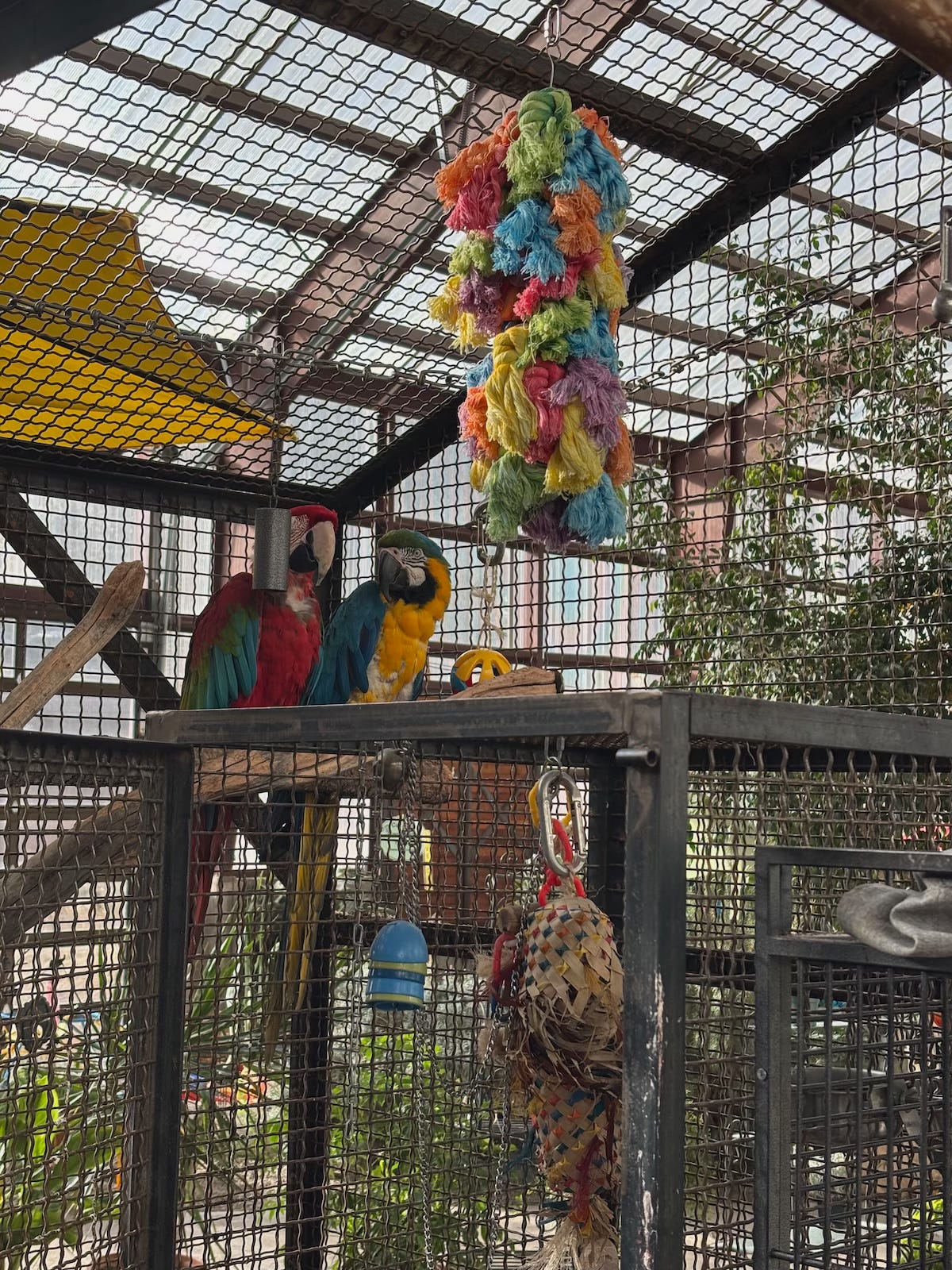
It’s not a bad replacement for the Green Parrot, which remained a beloved dive bar until it was replaced a few years ago by a shop that sells $28 tapers.* Ginger and Mary Ann oversee their inheritance from their perch near the check-in desk. When I sink into one of the pools, surrounded by mountains and a bluebird sky, I think of the joy Charlotte felt, not despite the hard work but alongside it.
“Living then was happiness,” Charlotte wrote, “and such peace and calm. My life has been enriched by these pleasant memories.”
You can buy Memories of St. Elmo here. Reserve one of the Merrifield Homestead Cabins here.
* It’s a lovely shop. I buy a lot of my Christmas decorations there.
Up next: The 411 on 420 S. Main, from brothel to burgers, featuring another tough Colorado cookie.
I’m here. Love your words.
So beautifully told, Elaine. Thanks for sharing Charlotte's colorful history!