
The Joy Hard-luck Club
Cock-Eyed Liz didn't choose the life, but she made it pay

Hi, all. I’m back in the mountains this week and it’s snowing! Under normal circumstances, which this winter has not resembled in the least, the cabin would be inaccessible to those of us who don’t drive “snow machines” (b/c they are only slightly safer than a mule on meth, and require more maintenance than a Kardashian). But my neighbors drove to our ghost town in a plain old car a few weeks ago, so I’ll be checking out The Worst Road in Colorado later this week. It doesn’t take much to make it impassable, so keep your fingers crossed (for it to be impassable, I mean. We need the snow desperately up here).
In the meantime, here’s another resourceful Western woman I would’ve loved to share a drink with at the saloon. Read on to the end for a short list of recent Substack posts I enjoyed, and please click that heart and share.
Cock-Eyed Liz arrived in Buena Vista in 1886, when the town was a popular stagecoach stop between the boomtowns and farms of the central Colorado mountains. It didn’t take long for her to make headlines. She’d been a child bride at 13, forced into prostitution by her violent older husband.
Somewhere in the mountains, the SOB died or she just shook him loose like an old mule shoe. Soon after, she had a new last name and a “low brothel.” Lawsuits and more public denunciations followed, but her business rolled along, consumer demand outrunning the censors like it always does.
And I don’t think the importance of this can be overstated: She owned the real estate.
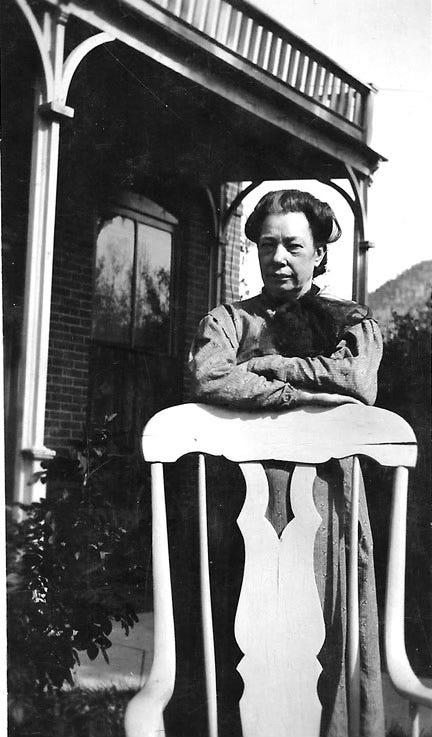
Naturally, there was competition. According to one version of herstory, a rival madam was responsible for the brawl that injured Elizabeth Spurgeon (aka Spurgen) and inspired her (awkward? punny? prophetic?) nickname. Author Ron Franscell, who included Lizzie in the Crime Buff’s Guide to the Outlaw Rockies, believes it was a childhood injury.
Liz seldom gave the census-takers the same story. She was born “at sea”, or in Michigan, maybe Louisiana. But she was at her mother’s side in Kansas in 1905 when that woman passed away. Maybe mom was proud of Liz, making hard lemonade out of an abundance of lemons.
Liz was a natural marketer, advertising her “girlies” with the help of a trained magpie and direct customer outreach. She’s credited with the observation, “A parlor house is where the girls go to look for a husband and the husbands go to look for a girl.”
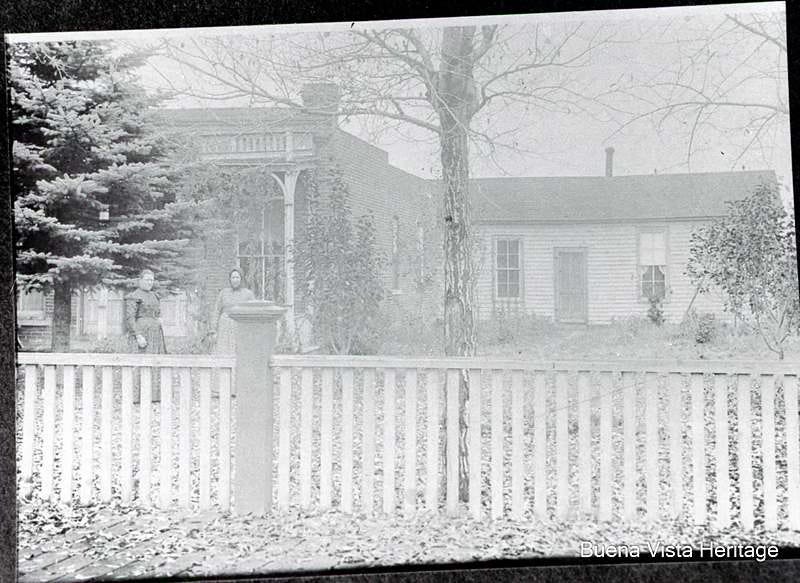
In her case, at least, it worked. At age 40 she married Louis Alphonse “Foozy” Enderlin, a French miner and plumber with a talent for homemade wine. They expanded the original building, a one-story frontier brick box with elegant wood trim, and she retired from the life. It was good timing, once again. By 1900, the town’s population would drop by more than half, to just over 1,000 residents.
Liz and Foozy lived in the same building where she’d run her business, but some writers have speculated that Liz was ashamed of her past. A popular version of her tale saddles her with soul-crushing regret.
“Oh, all the little lives I’ve destroyed,” she allegedly told her housekeeper. “That’s what I’ll have to pay for – all those little young lives.”
That plays a little too well to a judgmental and sentimental audience for my taste, like bottom-shelf imitation Tennessee Williams. The court shall regard it as hearsay. Or envy, that great thief of joy. Two stories just this week reflect the timelessness of Liz’s predicament, that we pity sex workers sometimes, but we always judge them, consigning them to society’s dangerous fringe.
In Brazil, a samba school is celebrating sex workers during Carnival to fight persistent stigma (sex work is legal there, but because of a lack of clarity in the laws police are still able to target prostitutes). And in Nevada, where prostitution is legal in ten counties, workers at Sheri’s Ranch are unionizing over intellectual property rights, the dress code, and wages.
So I hope it is true, as Findagrave.com reports, that Liz and Foozy owned a cabin at picturesque Cottonwood Lake that they shared with friends. She made the paper for that, too, in 1921. Liz is buried with Foozy in a plot in Buena Vista, marked with a handsome headstone and fenced with plumbers’ pipe, and I am only ashamed that I haven’t visited it yet.
For many years Liz’s former business had the fortuitous Colorado address of 420 E. Main. When the property was purchased and redeveloped in 2023, the builders preserved the original structure, and it’s once again home to some of the town’s most popular businesses.
The Buena Viking is a former food truck whose success is due in part to generous cocktails and an excellent attitude (motto: Be yourself. Unless you can be a Viking, then always be a Viking). I love the decadent Boone burger, named for the owners’ old dog (RIP) — a beef patty topped with grilled jalapeños and a slab of cream cheese.

Across the courtyard is CKS River Supply, a longtime outfitter and lifestyle store purchased by former river guides in 2016. Upstairs, the beautiful Shorehouse Hotel rents out four suites – incidentally, the number of working women the House of Joy could accommodate.
Liz’s ghost is still knocking around town. Every year the Madams of Central Colorado tell her and her rivals’ story at the Buena Vista Heritage Museum, just down the street. The play was written in the women’s own words by local Kathi Perry, who portrays Liz.
Perhaps in a nod to Cock-eyed Liz’s innate showmanship, the Madams credit the brawl for her infamous nickname. If you visit BV during Gold Rush Days, you can catch a performance.
Next: The accidental HOA at 10,000 feet …
In the meantime, check out Ron Franscell’s award-winning mystery Deaf Row, set in a fictional mountain town outside Denver, featuring a burned-out, aging homicide detective and a terrifying cold case. It’s a little like Craig Johnson wrote the Thursday Murder Club.
THIS MONTH ON SUBSTACK
Even the Losers Get Lucky Sometimes
The Naughty Aughts, as we called them at one point, were brutal. Online harassment really came into its own, and the chest-beating and haranguing of bro culture infected everything. I had an early brush with cancel culture – organized by a couple of Millennials on my newspaper staff, who tried to do it anonymously (lolol). Fortunately, the method and tools weren’t perfected yet, and my bosses didn’t cave. But I did waste precious days of my life worrying I’d lose work I needed and wanted, and wondering what I’d done to deserve the treatment. It was a rough year in what I thought would be my dream job, and I felt a little ill when I first saw the title of this post. The essay is funny and sharp, and clarified that time period for me. Hurt people hurt people, as they say, even if there’s nothing really wrong with them except life not meeting their unreasonable expectations for easy success. I can’t say I love the 2000s, not really, but I understand them better now.
You Should Read Colleen Hoover
This examination of Colleen Hoover’s haters is meaty and delicious. E.g.: “But, as damning an indictment of Hoover’s writing as her own prose might be, clunky sentences abound in award-winning books as well. (Looking at you, Ocean Vuong, Rita Bullwinkel, and Colson Whitehead!)”
Hoover’s writing does make me want to throw the book across the room sometimes (the ridiculous wrap-up in Verity, for instance. JHC!). But I do appreciate her very human portrayal of relationships, her refusal to make them neat parables with “correct” endings.
I think the authors nail it when they call out the classism behind some of the disdain for Hoover. I was a single mom (twice!), and while having those kids was the best thing that could have happened to my young self, I also felt shame at times, or shame pushed at me (these were the Gingrich Contract on America years) for choosing or falling into a “bad” lifestyle. I’m sure to my dismayed parents it was “white trash”. And so I think maybe some of my resistance to Hoover has been very personal - maybe more like an aversion!
The Good Girls’ Guide to Getting Sex-Trafficked
Back to Cock-Eyed Liz and a tale as old as time. This post broke my heart. It’s a potential pitfall for many ambitious young women, but especially women who crave a creative life, a nontraditional life, and don’t have family or independent means to support it.
Your description of snow machines at the beginning of this post is spot on AND hilarious!