
The Diplomat, but with amateur historians
Lower stakes, higher drama

Dear friends,
We have snow, deep, heavy, and sparkling like diamonds in the sun this morning. The mood in town is electric, and at least one of my favorite businesses (a local distillery) called an all-staff sick day yesterday so they could go out and ride. But we need more - the central Colorado area as a whole is between 50-69% of average, and the forecast is clear for the next week. Snow dances, please.
Read on for book publishing news and a peek at the full cover for Up to Her Neck, and find me on Instagram (@elainemwolff) for pics from this week’s trip to the cabin. We made it up Wednesday with some of our neighbors just ahead of the storm. Please share, like, etc!
I’m a member of my local historical society, but I no longer go to the meetings. Believe me when I say it’s for the best. The last one I attended? I yelled at an older woman. (That is, a woman older than me, although not by much.)
Maybe it was more like a raised voice, with short, declarative sentences. But in the context of a historical society that makes librarians look like the crowds at a European soccer match, it felt like yelling. I was upset afterwards because I’d upset her, but also because my husband was right.
The first month we spent at the cabin, I was too busy reading appliance manuals to give much thought to the ghost town up the road. It was a half mile from our place and I walked to it now and then for a break from our endless to-do list. Most of the buildings were boarded up, and I never spotted a soul.
I’d peek in the windows of the schoolhouse, a narrow box with tidy four-pane windows. Then I’d cross the dirt road and study the small brass plaque describing the settlement’s founding. It contained the name of the man who’d registered our mining claim in 1900! Something to look into once we got the water heater running.
I hadn’t had a hot shower in a week when we met our first neighbor. He was leaning on a mountain bike at the end of our driveway, staring at our silver Airstream as if he’d just encountered Fitzcarraldo hauling his riverboat over the mountains of South America.
“Welcome to the neighborhood,” he said, all chipper and well-groomed. He’d dropped by to invite us to a meeting of the historical society at the old post office. Most of the cabin owners would be there, maybe even our local Forest Ranger. It would be more people than we’d seen in a month. I RSVP’d yes on the spot.
Michael was not enthused. “We didn’t buy this place so we could go to meetings,” he said. “You’re going to regret it.”
But it was fun, at first. We weren’t the only new kids on the block. A couple from Austin had bought the old bordello, which still contained the “waiting bench” and a recipe for corn whiskey handwritten on the door jamb. He was an architect from Louisiana, where Michael went to school; she was a former lobbyist who used to hang out at Eeyore’s Birthday Party the same time I did (i. e. before it became “family friendly”). We hit it off right away.
I threw myself into it, brokering a truce between the society and an annual sports event and landing a small donation to our preservation fund. Michael and I were outsiders, in a way, the only members who owned our land, but I felt like part of our quirky little community.
The cabins in the “ghost town” belong to the residents, but they sit on Forest Service property and cannot be used as full-time homes. They’re still a relatively affordable way to get a rustic summer house, so the owners are a wonderfully diverse lot.
The neighbor who invited us to our first meeting had built and sold a home-siding business. He talked like a college professor – behavioral economics or theoretical physics. His brother, who co-owned a cabin with him, was pure Danny McBride energy. They shared an enthusiasm for addressing problems with chainsaws and earth movers. For the purposes of this story, we’ll refer to them as the Lowes*.
Danny Lowe offered to store our Airstream in his barn for free that first winter. Free, that is, unless you count us buying his used snowmobile, which sat behind our house for two years before we unloaded it for a fraction of our cost. But that’s a story for another day.
The town’s seasonal population also included a real-estate agent who liked to shoot targets on Sunday, a tech entrepreneur with a new baby, a retired social-studies educator, a software engineer, a credit-union executive and her wife who worked at a natural-foods store, a violinist, and a retired building contractor.
And, of course, the woman I would one day get into it with during a Facebook livestream.
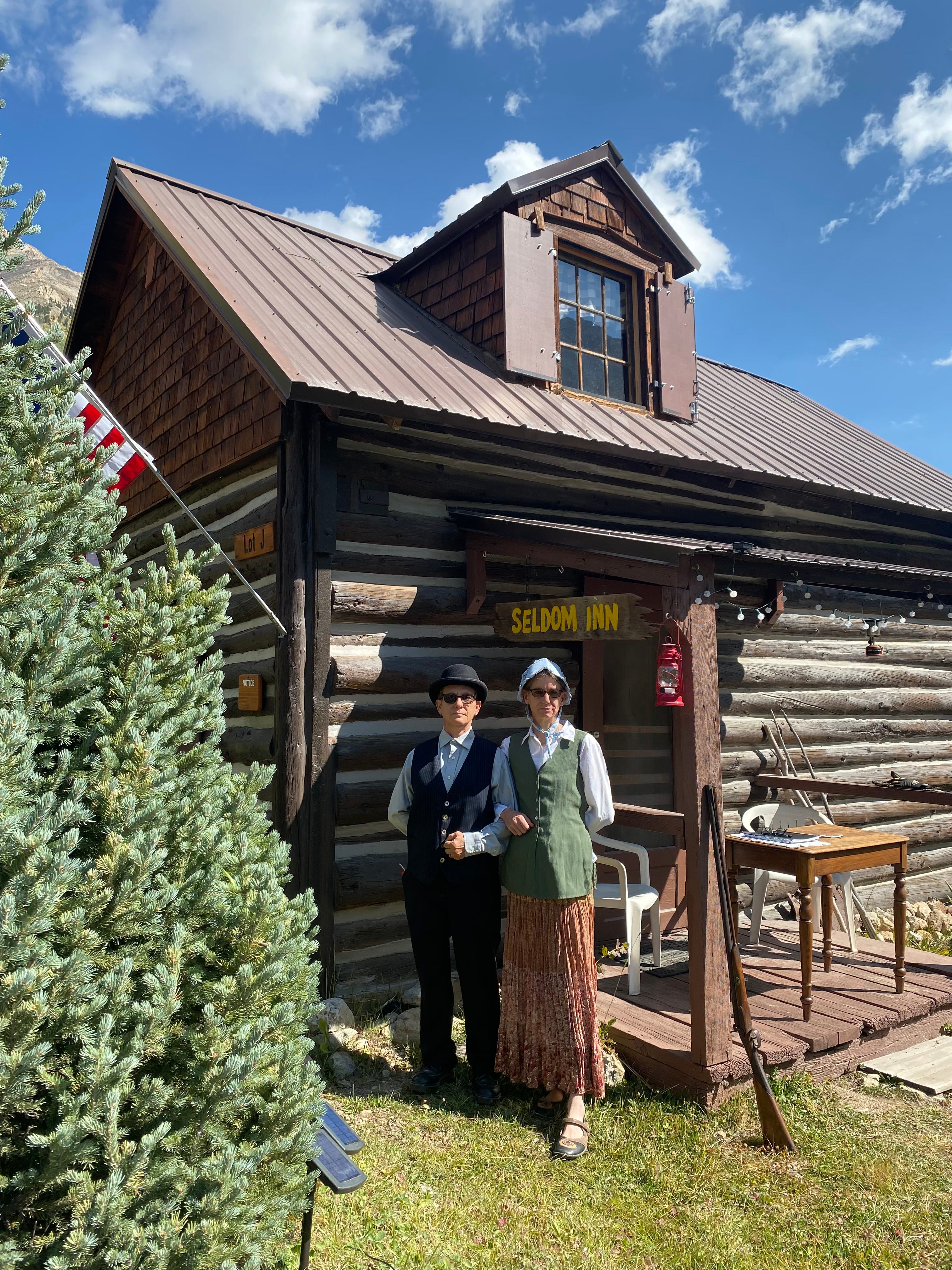
Let’s call her Emily. She’s thin and elegant, with long silver hair and a voice that fills with childlike enthusiasm when she’s talking about her family’s history.
Emily is a relative newcomer to town, but she’s descended from one of the original miners. After she discovered her connection to the canyon, she compiled a book of oral histories, collected photographs, and figured out where the bodies were buried … in the old cemetery. Armed with Emily’s research, the society installed white crosses on the unmarked graves.
Eventually the group made Emily its official historian, which I believe is the position Joseph Stalin held with the CPSU. Just kidding. He was the secretary.
The society was formed in the Seventies by a group of cabin owners because the Forest Service had started condemning property and burning vacant cabins in the canyon’s defunct mining boom towns. If it weren’t for the society, and a sympathetic ranger, nothing would be left now but a few sunken foundations.
The original members restored several buildings, created three museums, and published a booklet containing a brief history of the canyon.
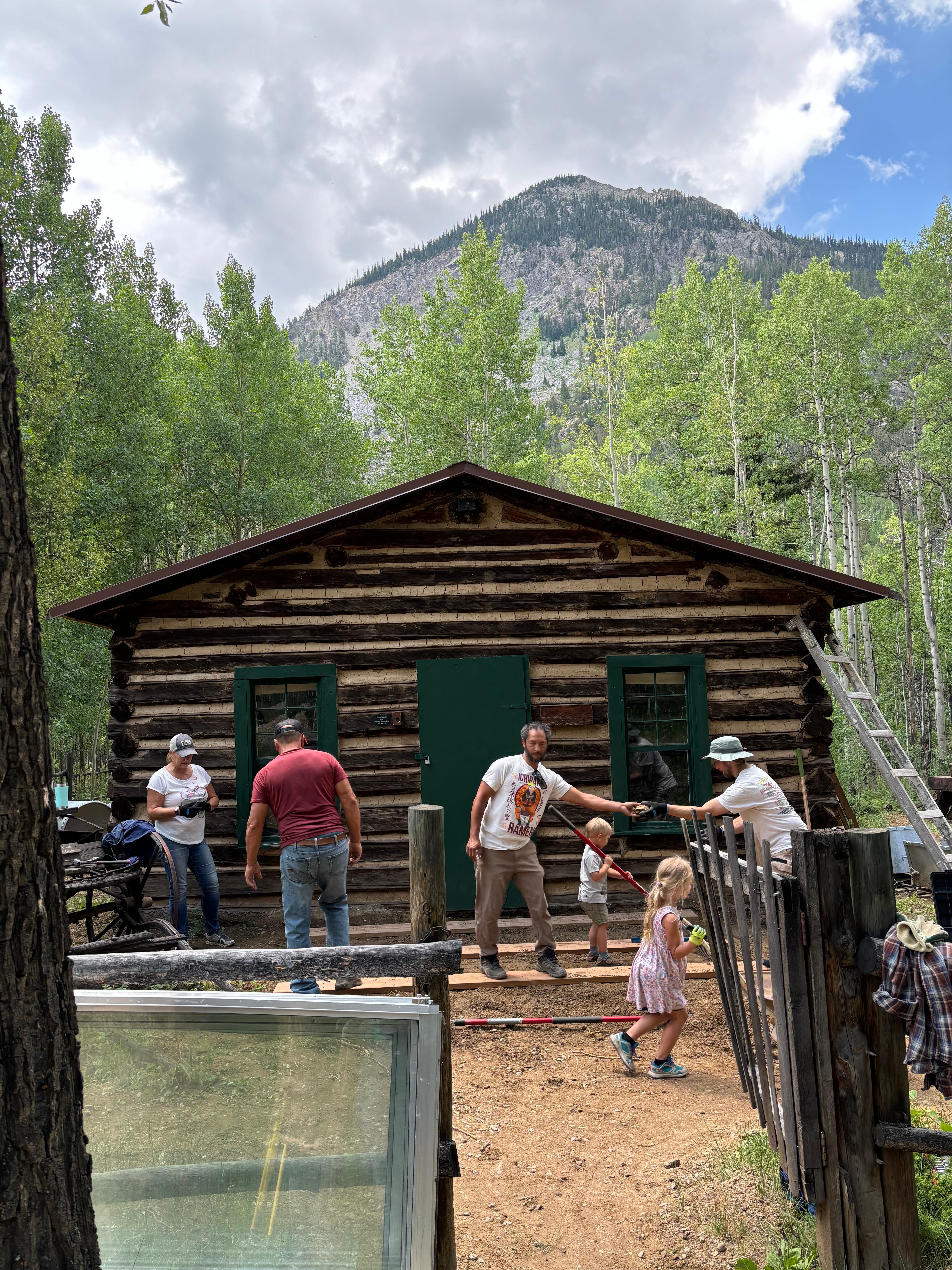
But if the founders were the scrappy builders and visionaries, the modern society is the overworked groundskeeper. We have a few thousand dollars in the bank and a dozen active volunteers, several of whom would violate child-labor laws if we paid them for their shoveling and wheelbarrow services.
Our resources are taxed every year by extreme weather, invasive rodents, vandals, and our limited meeting schedule. It’s two steps forward, one step back, with a tipsy line-dance stagger to the left. Not only do we embody democracy in all its strengths and weaknesses, we enact every dysfunctional group dynamic you’ve read about in your daily scroll.
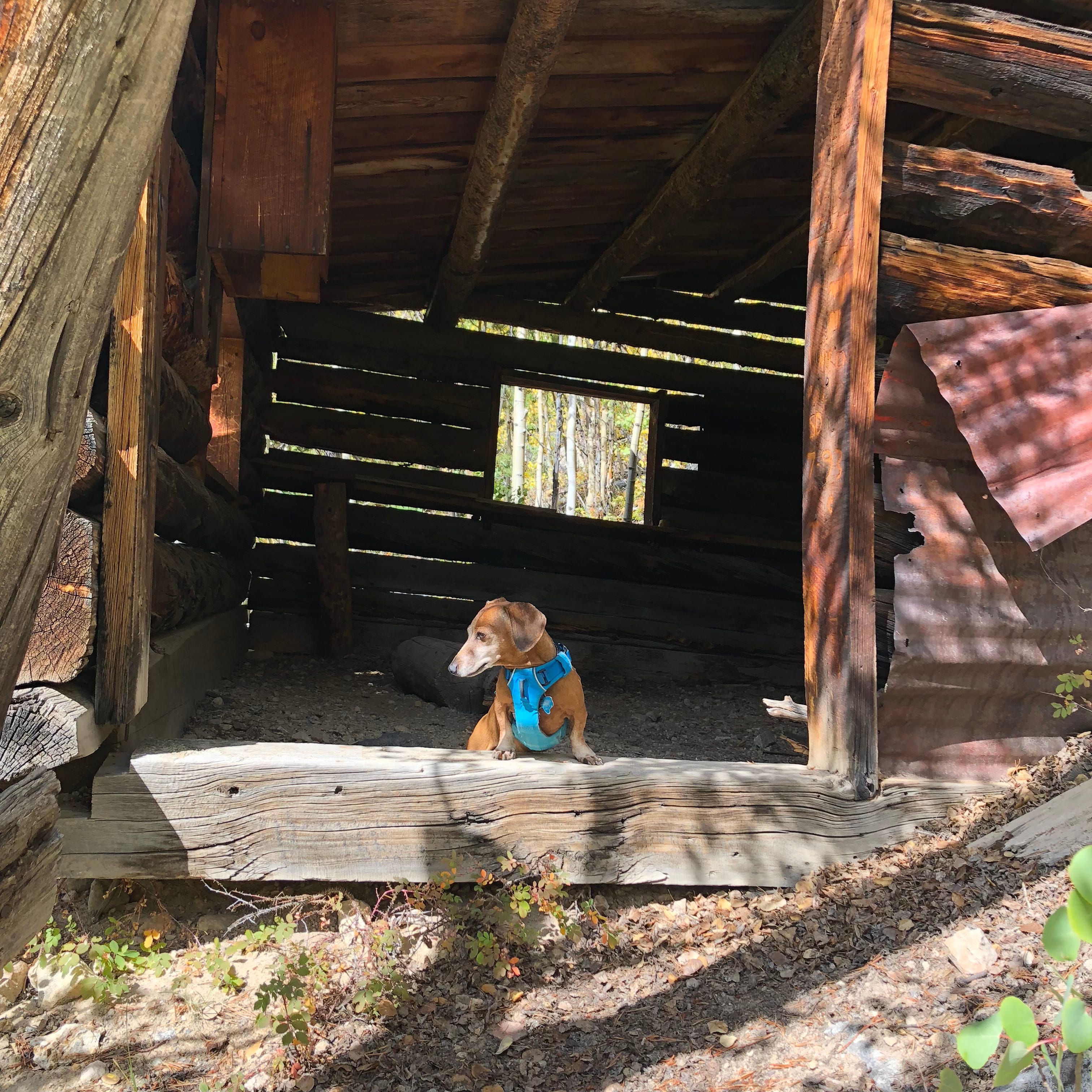
Meetings include lengthy discussions of the infamous Moonshine Jones cabin, a society talisman that slouches alone near the entrance to the canyon. For years, no one was sure if the society could even claim it under our special use permit with the Forest Service — which has never stopped it from dominating the agenda during our four yearly meetings. Cheap schemes for stabilizing it are floated and picked apart. We table it for the next meeting.
Eventually someone makes a motion to install a new metal roof or replace some logs on one of the museums. The Lowe brothers volunteer to bring the machinery and we adjourn.
But first Emily reads an essay, sometimes a tale about a Ute Indian boy who helped the miners find missing valuables (like St. Anthony, without the medal), sometimes a group favorite about the old miner’s limb that came loose and got stuck in the dam when his body was being carried down the mountain.
A couple years ago, the society voted to install signs marking former cabins and businesses. I volunteered to put one in front of our place. Our claim had belonged to one of the town founders, after all. He’s buried in the cemetery under one of those bright new crosses. I suggested putting his name and “mining claim” on our sign, or just the name of the mine.
The society was enthusiastic. Everyone hoped it might cause the Fourteener fanatics to slow down before they reach town instead of barreling toward the T intersection at 45 mph.
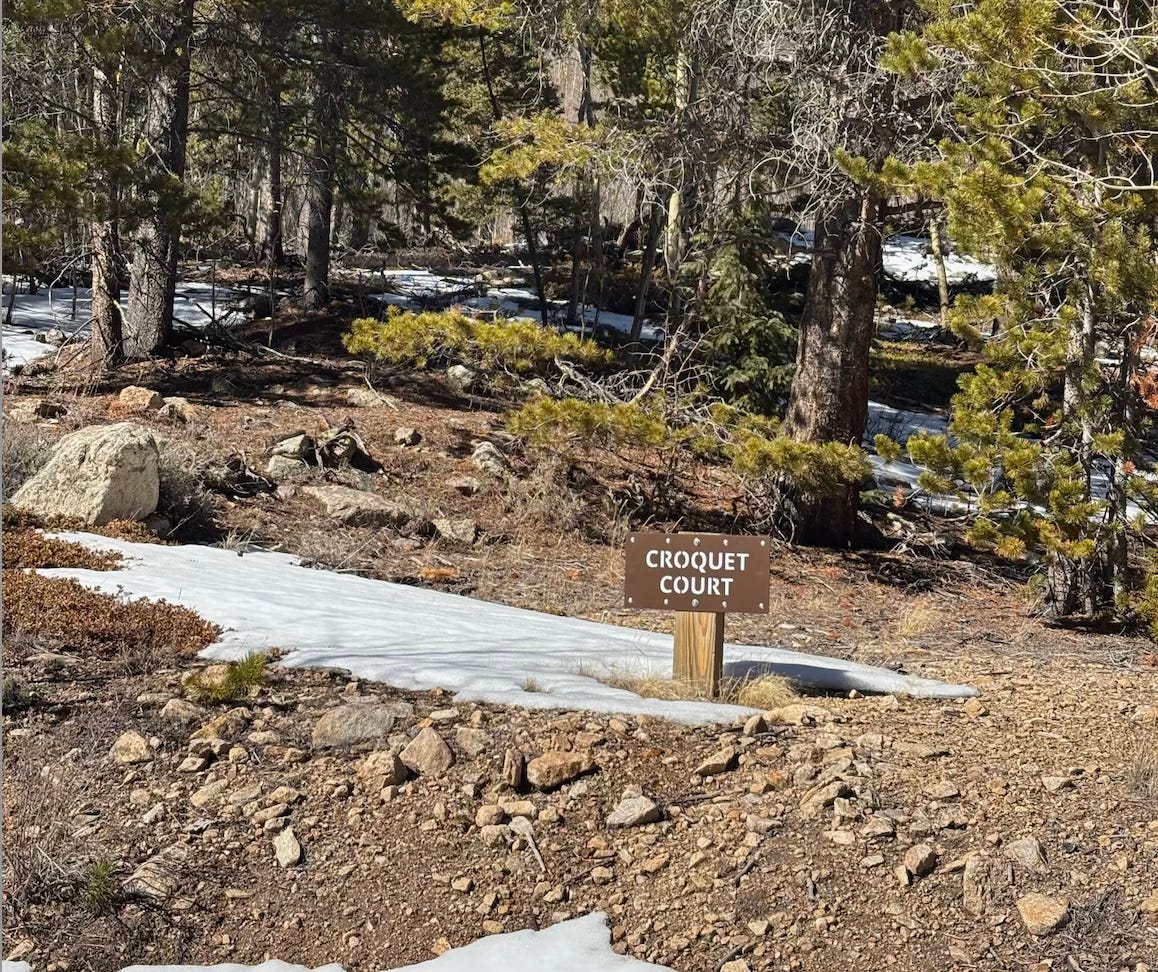
Several months later, the signs arrived. Emily’s husband dropped ours off on our porch, where Michael found it.
“Why does it say, ‘Smelter’?” he asked.
I grabbed it and almost dropped it on my foot. The sign was powder-coated in official-looking Forest Service Brown and weighed a little more than the 4Runner. It didn’t mention the town founder, the mine, or the claim.
What the what? I asked Emily at the next meeting.
Well, there was a smelter there, she said.
She pointed me to a hand-drawn map of the canyon, circa 1910. Tiny dots and numbers were scattered along a spidery web of roads. Some of the words were straight-up runes, several appeared to say “unknown.” Other designations were obviously inaccurate.
A note under the legend caught my eye: It was made by a man born in 1902, who recalled playing in town as a child.
Even if the map were correct, I said, it also showed a sawmill on our place. If she was going to make extrajudicial rulings, why not something more Pa Ingalls and less Industrial Revolution?
Emily implied it was an honor, because not every small mining town had its own smelter. I implied we might as well put up a digital billboard that flashed, “Vintage Superfund Site” in large red letters.
The sign remained face-down on our porch.
Michael and I were not the only dissidents. Our Austin neighbors received a marker that said, “office.” Tourists started knocking on their door at all hours. They replaced it with a handmade wooden one of their own. (Sadly, it doesn’t say “brothel,” so we can’t draw any conclusions about the relative appeal of mining-town attractions.)
Another small faction remained irked about the cemetery crosses. Weren’t they presumptuous in a town that had once supported three saloons and a bordello but no church?** They’re also somewhat Pet Sematary in the forest’s gothic natural lighting, but to me that’s a plus.
In the meantime, a conflict over photographs was simmering underneath it all …
Next: How to lose the battle … and the war.
*Names have been changed because I’m relating this from memory and taking some liberty with the timeline. Please read with a grain of salt.
** Descriptions on Wikipedia and other sites list a church, but earlier accounts say that while one was built, services were never held there.
BOOK NEWS
We have a new publication date for Up to Her Neck! January 19, 2027. Preorders are open at bookshop.org, barnesandnoble.com, etcetera (it’ll also be available on Amazon, but isn’t yet)! I love getting books in the mail that I ordered months earlier - it’s like Christmas.
My lovely publisher, Empress Editions, made a fab post on Instagram for Women’s History Month, comparing my sleuth to Nancy Drew. (They have a stellar slate of books this season by and about women - check it out!)
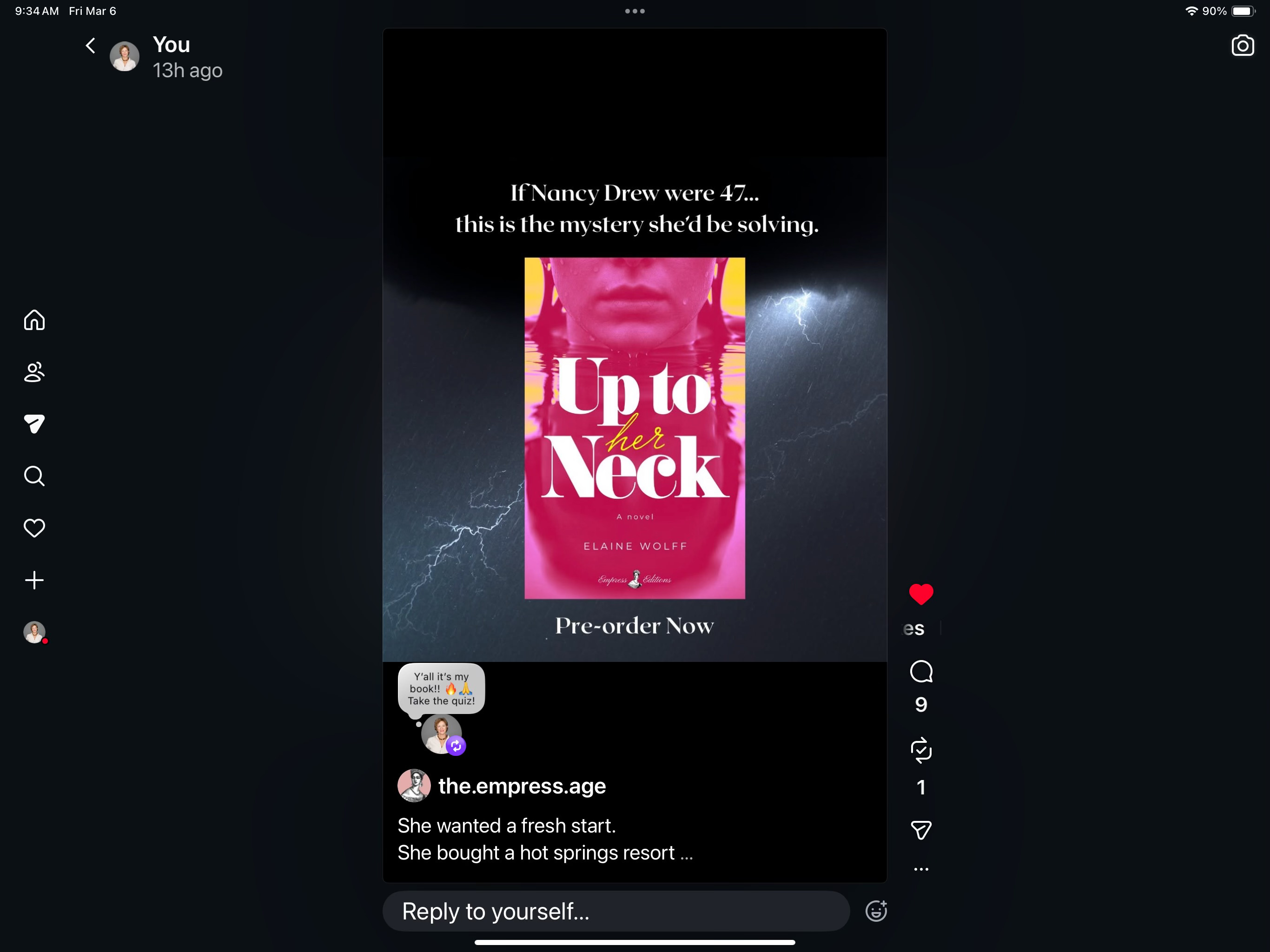
Naturally, I’m a Nancy Drew fan from way back (tho not as way back as the first edition of The Haunted Bridge in this video …)
Okay, that’s it for now! See you next week.
This was a super fun read. And the Stalin line had me lol’ing!