
Sh*t gets real
This should have been Cabin Post No. 2

I was walking with Michael in the West Village on a gorgeous fall day when my phone rang. I bumped it to voicemail. It rang again. The name “Sue B.” floated over a photo of a one-story brown cabin encircled by pines and aspen.
“Uh-oh,” I said, “it’s our realtor.”
A septic inspection was scheduled that morning at the property we had under contract in the Rocky Mountains. We were close to the end of our option period, and we were optimistic. The building inspector had turned in his report a few days earlier.
“Even with the issues that I have outlined,” he wrote, “I think these places have some great potential with some upgrades and a little care.” He described the roof of the main cabin as “sound.” Sound! Like our decision to buy the place!
But we would need a separate inspection for the septic system that was connected to the sole indoor toilet. This step was crucial for Michael, whom I’d coaxed and argued into my wild scheme. Yes, the property was off-grid, but it wasn’t primitive. We would have lights, running water, internet. And modern waste disposal.
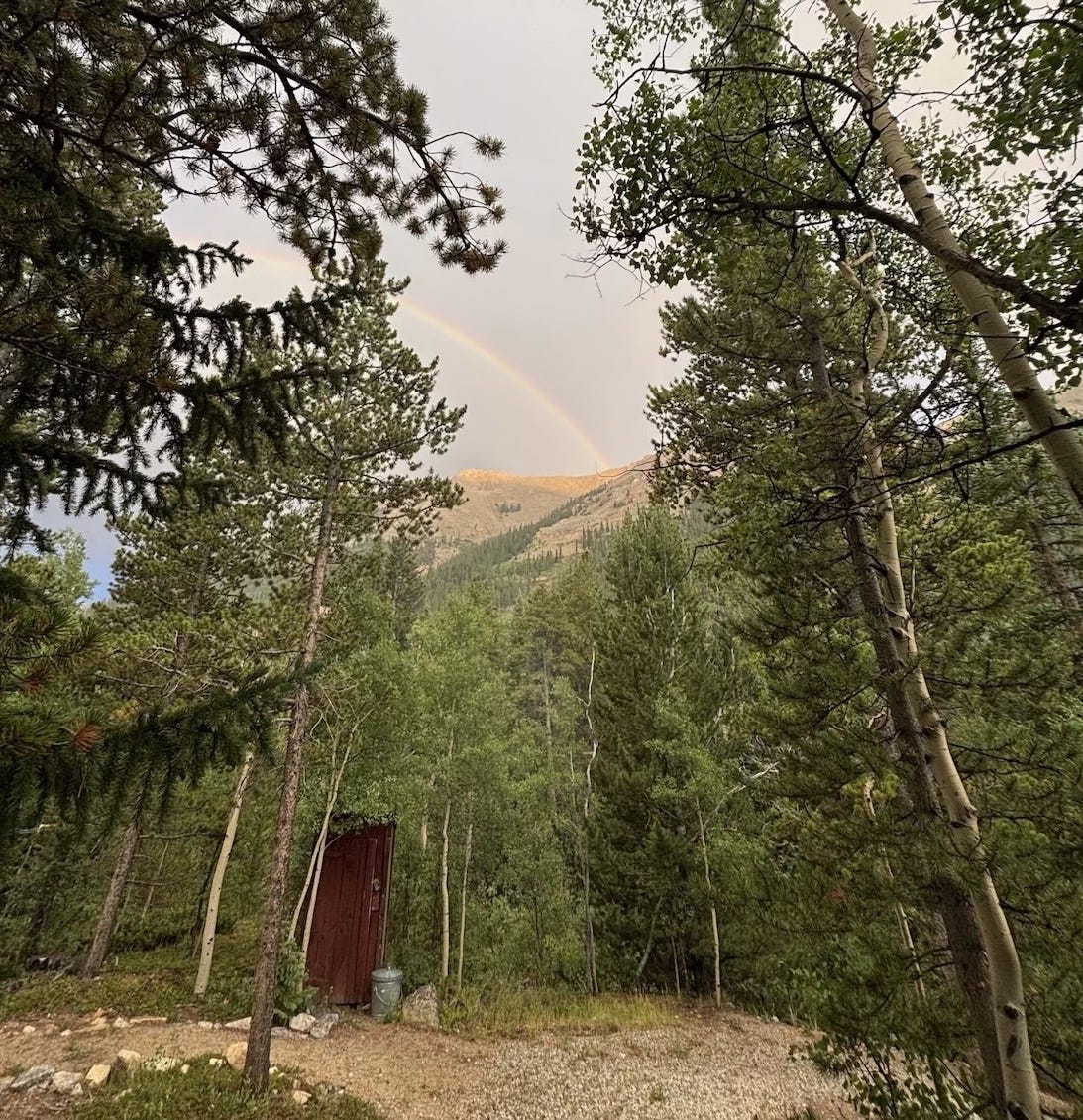
He’d finally agreed, with the requirement that the outhouses were strictly décor – even the green and pink number with an “Office” sign hanging on it, which I’d named the Watermelon.
I pulled Michael into a doorway before answering the call. Sue was a five-foot, honey-blonde Granite State transplant who’d traveled the world before settling in the mountains of Colorado. She never raised her voice above “meditation retreat leader.” That day, she was breathless.
The septic inspector had called her the moment he got cell service.
“He couldn’t find the tank,” she said, “but he found a mine shaft by the cabin.”
“What do you mean, by the cabin?”
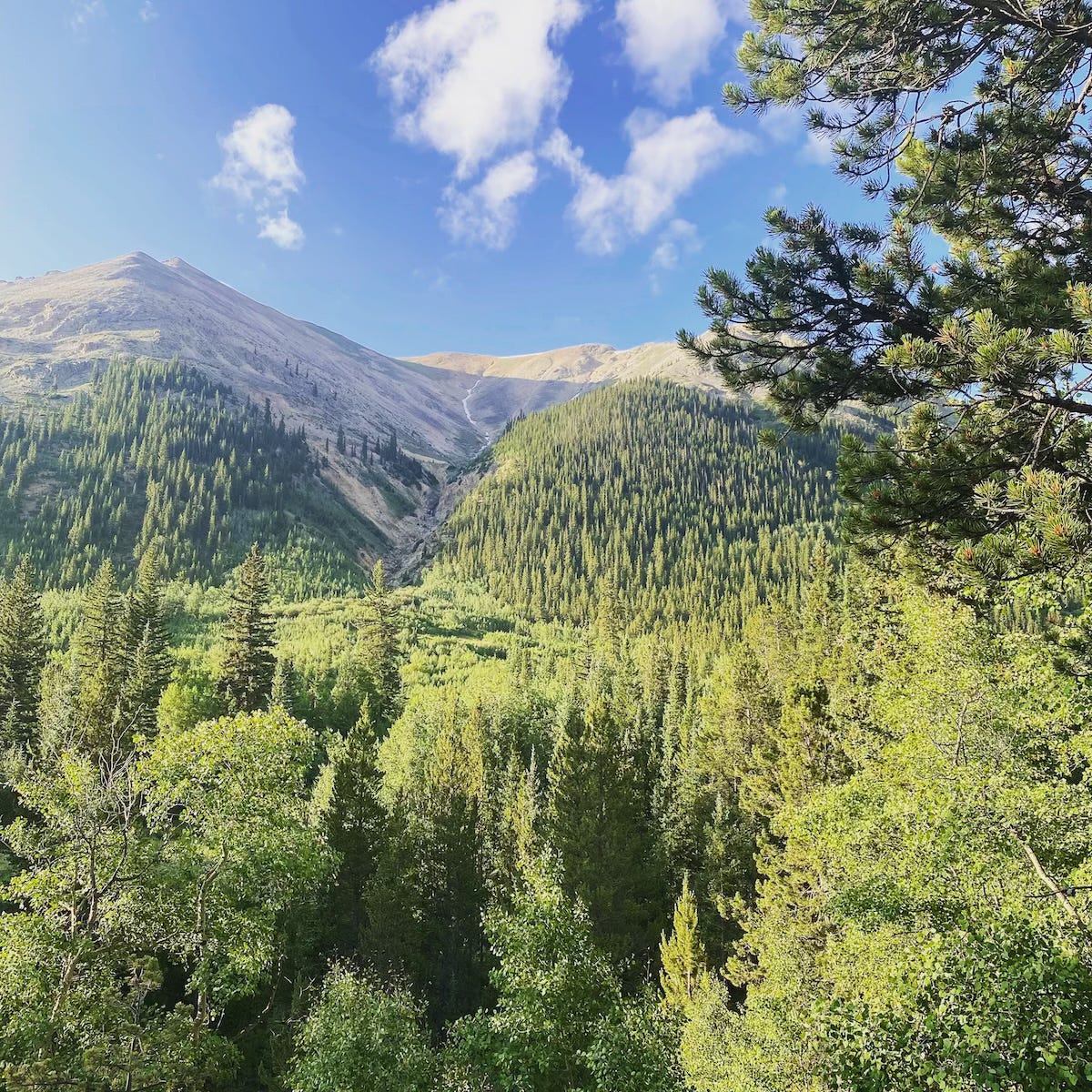
We knew the property was an old mining claim. The survey used to register it in 1900 showed three cuts and two adits, but they were acres away from the buildings. Up the mountain. On the other side of the road. Overgrown tailing piles, deep gold and scattered with glittering pieces of quartz, were the only evidence left of the old excavations.
Sue was still talking, using phrases like, “adjacent to” and “couldn’t see the bottom.”
Less than seventy-two hours later, we were back in Colorado. Ice floated in the creek. The late-fall sun cast long shadows on the frozen ground. We paced around the foundation in widening circles, clearing snow, checking under stones and machinery. Nada.
Then I realized what we weren’t seeing: tire or boot tracks. Maybe the inspector went to the wrong cabin?! The claim didn’t have an address; directions consisted of, “turn left, drive eleven miles. If you get to the ghost town you’ve gone too far.” It was possible.
I called the county. The permit tech couldn’t find a record for a septic system. Given the age of the place, she said, that wasn’t a surprise. We pressed the owner again through his agent. He repeated that the toilet had worked fine since he’d bought the place … almost twenty years earlier.

We walked the creek bank, but there was no sign of a pipe. Phew.
“Between us,” I wrote in a jaunty email to Sue, “not a deal-killer but we do want to know what we’re getting into.”
We sent another inspector, who couldn’t find the tank either. He also didn’t encounter a bottomless mine shaft just out the back door. Score one for us. But every adventure is a journey of discovery, and one of the things I discovered is that I’m not a person who can flush a toilet in the woods and not worry about where that shit is going.
I had been in a state of mild dread since Sue’s phone call. In exchange for giving us six months to close, we’d offered the seller a large earnest-money deposit. In a couple of days it would go hard. My email bravado was empty: The outhouses were a deal-killer. They’re made of the kind of thick, knotty planks you can no longer find, furnished with handmade tp holders, chock-full of pioneer ingenuity. The red one has a skylight made from a vintage Pyrex dish.
But I couldn’t blame Michael if he felt his forebears didn’t suffer the indignities of the bedpan and the sadism of early dentistry just so he could return to the rustic joys of the pit toilet.
Could I?
We put off the conversation, talking around it in vague what-ifs and euphemisms. I was afraid he’d say no. I knew he was afraid of my disappointment. I’d been running a house-renovation and finance business he’d started without consulting me and I was angry and resentful, almost fifty, adrift. I felt like I’d never wanted anything as much as I wanted the Claim. I also knew this idea was a little reckless. And more than a little selfish.
If Michael had blinked, I don’t know what would have happened. But the place had gotten under his skin, too. We had to redo the cabin anyway, he said. We’d figure out the mysterious septic system then.
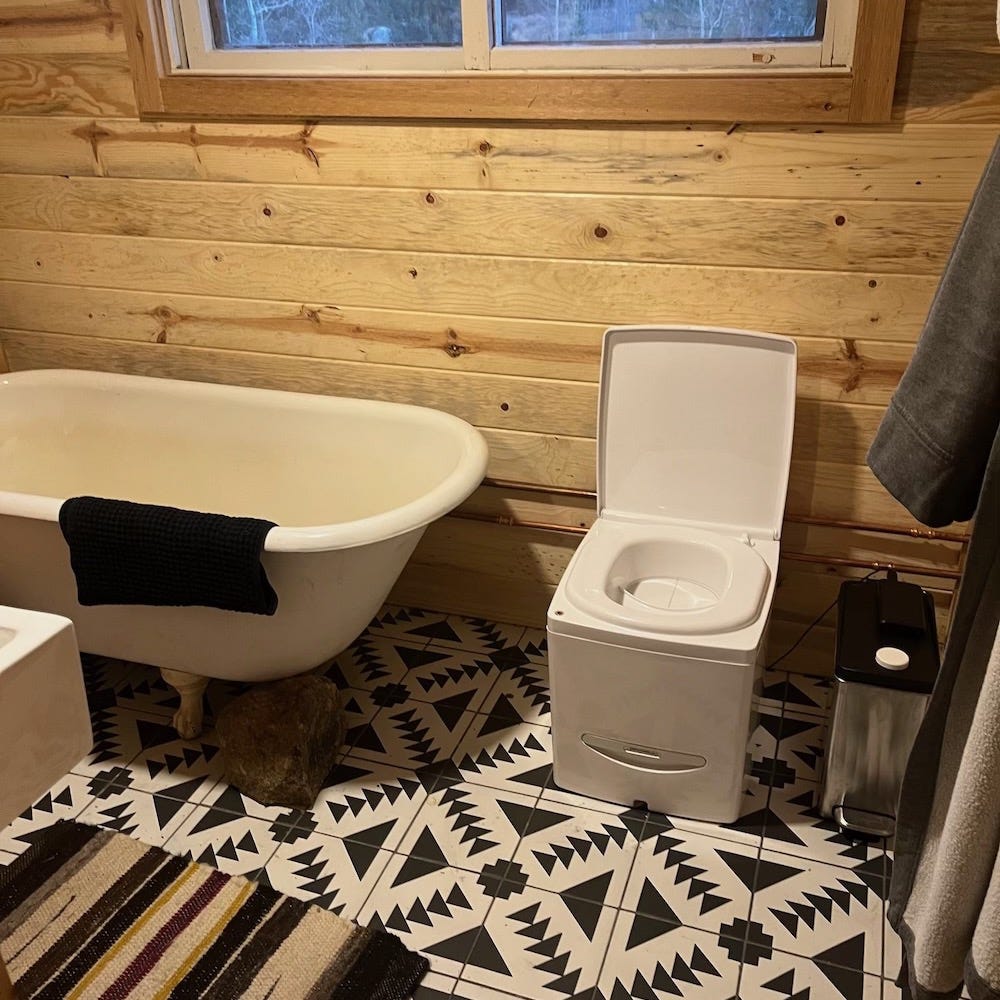
It’s true that all failure is at some level a failure of imagination. For instance, I did not imagine a mine shaft that was also a septic tank. Our inspection period passed and we were still in contract. Late at night, when I couldn’t sleep, I researched composting toilets.
Next: All the cool things that come with a 19th-century mining claim.
Part I: Little wreck in the big woods
Part II: Hand-me-down dreams