Hand-me-down dreams
Why do we believe we can succeed where someone else failed?

He looked like Bill Murray’s older brother. Except Bill Murray’s brother would have had that wistful half-smile on his sweet round face. It was a gorgeous November day, warm enough in the sun that the patches of snow were melting into the pine needles and rocks. I was ten-thousand feet up in the Rocky Mountains, trying to convince this man to sell me a cabin I couldn’t afford.
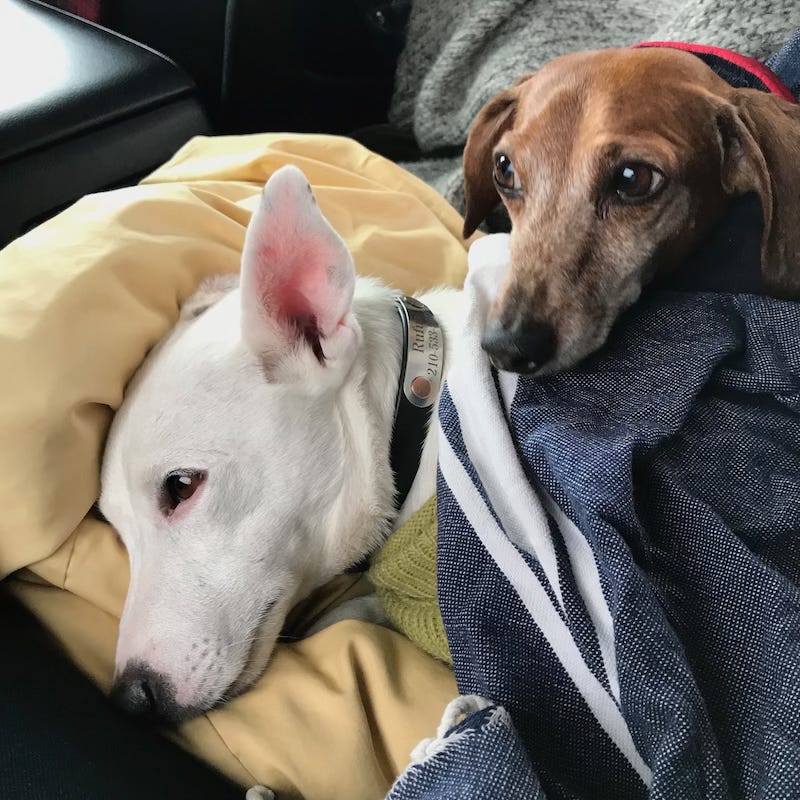
Michael and I had driven straight through from San Antonio the day before in our 4-Runner, with our dachshund Wally, two friends, and their Jack Russell, Rufus, in the backseat. It took fourteen hours, an interminable number of them spent in the barren Ports to Plains corridor between Texas and New Mexico, where Capulin’s extinct cone relieves the wind-blown tedium for all of thirty minutes. The floor was littered with burrito wrappers and Rufus’s little white hairs.
Our realtor had called two days earlier to say that the cabin owner wanted to meet us. He’d countered our first offer, which was ridiculously low, dictated by what we might be able to scrape together and wild hope. Then our negotiations had stalled out. But the owner was willing to drive in from Utah if we would come to the property. It was an opening, no question.
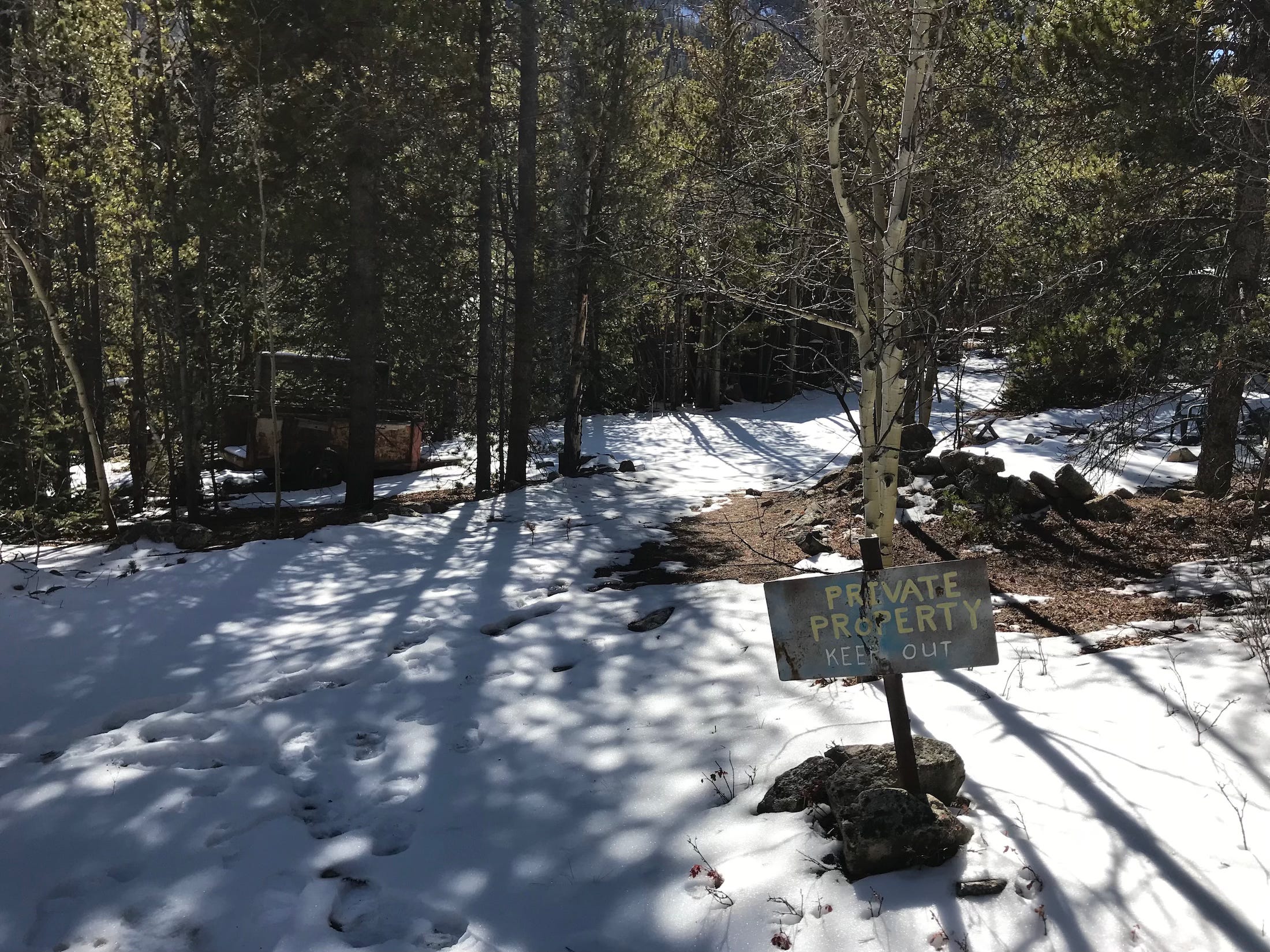
I’d noticed the cabin the year before, sitting back from a Forest Service road in a clearing of lodgepole pines and aspen. It was maybe six-hundred square feet, with two small wings off its center, its many windows covered in peeling brown boards. I spent the winter hunched over topo maps and the county assessor’s website, armpits damp, heart racing. The cabin sat at the lower end of a long, narrow lot that ran up the mountain at an angle. Make that cabins; there were definitely two. And was that the creek, cutting a meandering path through the southeast corner?
We’d returned late the following summer and planned our hikes as close as possible to the cabin, circling it like wolves on the hunt, feinting for an opening, a weakness. The same fading for-sale sign sagged near the drive. The plastic pocket meant to hold informational flyers was filled with dust. It still felt impossible, and yet there the little cabin sat, empty and unused. Waiting. The day we loaded the car to return home, we stopped by the real-estate office in town.
That was in August. Now, three months and countless emails and phone calls later, we were face to face with older Bill Murray, the man who held my dream in his hands. His name was Mark, and his family was descended from one of the old miners. He was divorced, had kids, owned bars in Utah. It was too much time and work now, and his family owned another cabin down the road, in one of the area’s many ghost towns. He wanted to sell this property and buy his brother out of the other one.
“All right,” he said. Small talk was over. “Do you want to see the inside?”
Okay, close your eyes and imagine a cozy room, with rustic log walls and a fire burning in the grate.
Now, purge that image from your mind.
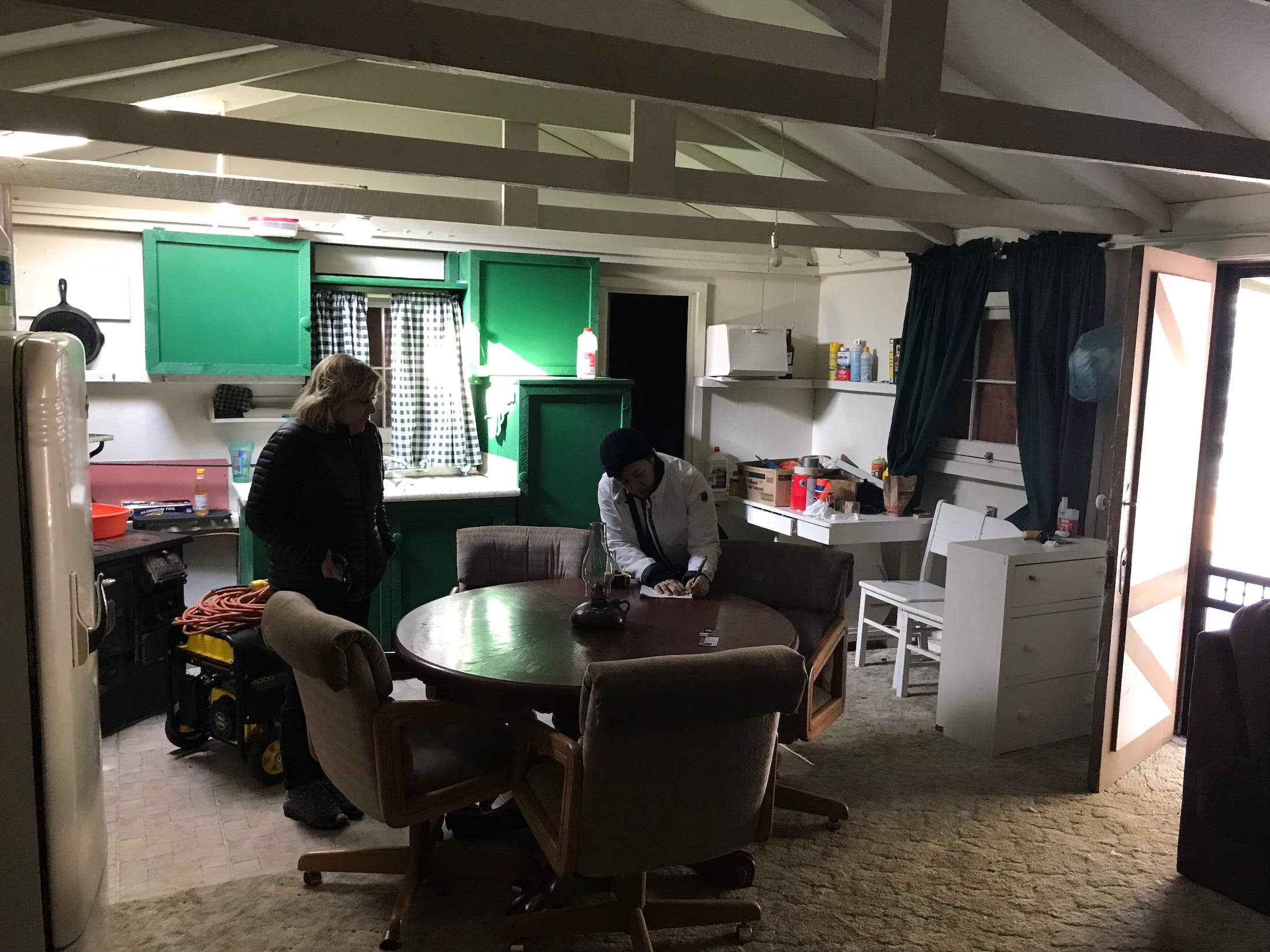
The mining claim on which we stood had been registered in the early 1900s, but the musty cabins we toured that day were built in the early Fifties. I doubt the carpet had been changed since. So many mice droppings were embedded in the textured swirl nap, I thought it was two-tone.
The walls were perhaps two inches thick and appeared to be supported, if that’s the right word, by horizontal two-by-fours. Extension cords ran through holes drilled in the two-bys. Ancient propane lamps were mounted on wooden beams overhead. The well was shut off, the pipes drained for the winter, so we couldn’t test the toilet, but Mark assured us it was connected to a septic system.
“It’s always worked fine,” he said. “We’ve never checked it.”
A yellow generator as big as a baby buffalo blocked the path to the wood-burning kitchen stove.
“I’ll leave that for you,” Mark said.
Friends, when someone offers you a free generator, ask why.
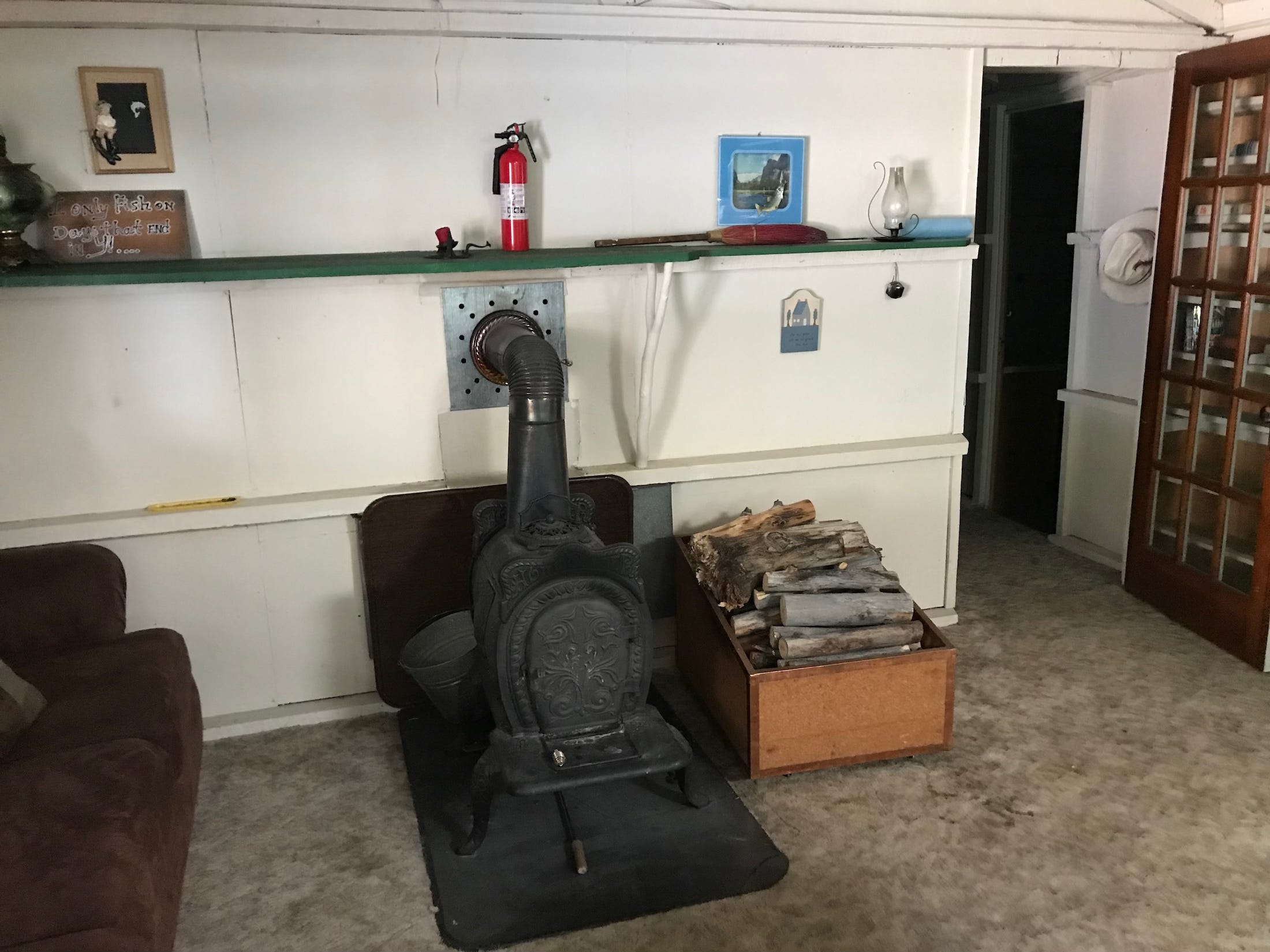
But I wasn’t asking questions that day, not the important ones. Silk barkcloth curtains hung in the bedroom windows, the pink and green pinecone pattern suggesting a woman’s eye. Several windowpanes were patched with duct tape, but the firewood box was well-made and tidy, and the vintage Servel refrigerator looked new on the inside. Did I mention the wood-burning kitchen stove?
The upper outhouse had been painted green on the outside, pink on the inside, like a giant watermelon. Mirrors were installed in both. More feminine touches. The daughter, maybe. Or the ex-wife.
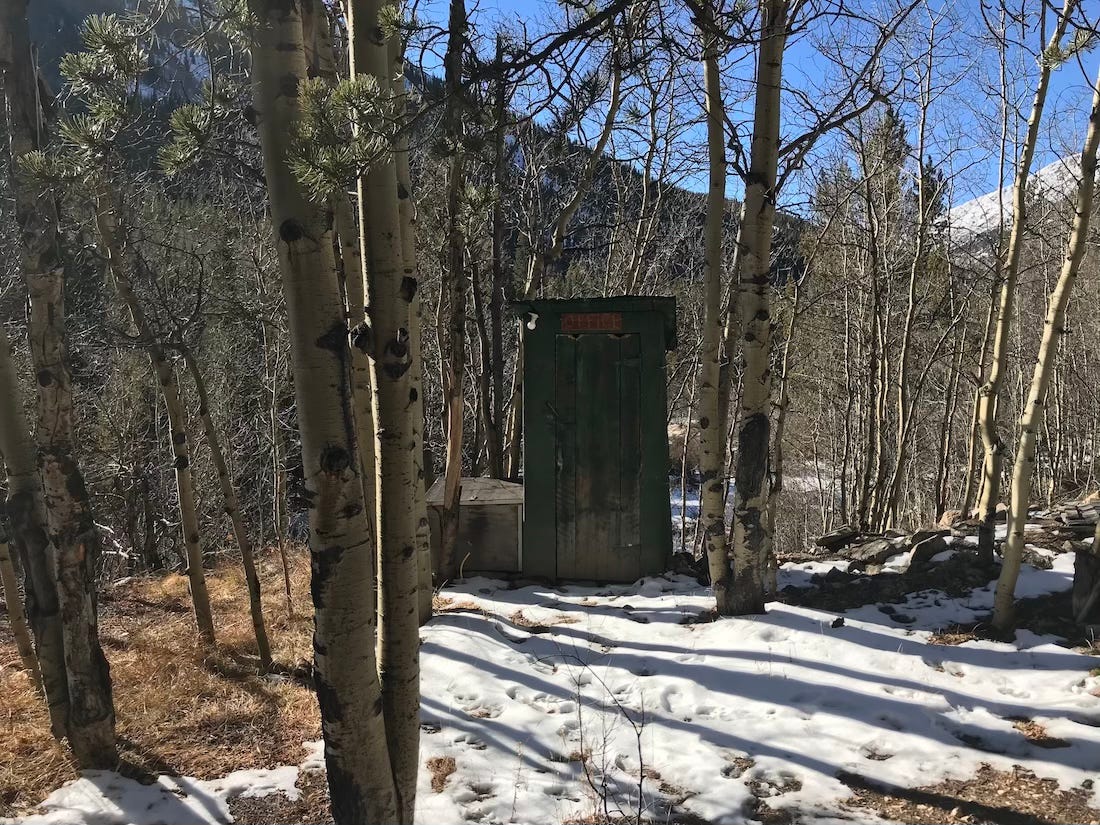
Mark waited with Sue while we walked down to the creek.
“It’s incredible,” we breathed to each other in the crisp air. “It’s perfect, right?” We’d hiked to the top of the property on the other side of the road earlier that morning. You could walk right onto the Continental Divide trail, or glimpse Mount Huron across the canyon.
By the time we returned to the cabin, we had folded. We agreed to Mark’s last counter, and he gave us six months to close (read: figure out how to pay for it). The road would be snowed-in soon. No one else was coming to see it before the spring anyway.
He smiled, which was the first time I noticed the sadness hanging on him like a thin cardigan. But I was too stunned by our mad leap, our daring, to grasp this, that the beginning of our dream might be the end of someone else’s. There would be time for that later.
“I hope you guys enjoy it,” he said. “It’s a really special place.”
Next: “The septic inspector called. He said he found a mine shaft?”
Previous: Little wreck in the big woods